
Table of Contents
- Why Ceramic Tint Scratches and What Protects It
- Wait for Proper Window Tint Curing Time Before Cleaning
- Choose the Best Cleaner for Tinted Windows
- How to Clean Tinted Car Windows Without Scratching the Film
- Tools and Habits That Cause Scratches on Tint
- How to Remove Scratches From Window Tint
- Booking a Scratch-Resistant Tint Job in Wilmington
- Frequently Asked Questions
How to Protect Ceramic Tint From Scratches: 7 Steps
Last Updated: November 12, 2026
Why Ceramic Tint Scratches and What Protects It
Ceramic window tint is a strong, durable film, but it is not scratch-proof, so knowing how to protect ceramic tint from scratches matters. Most people assume the ceramic layer makes the film impossible to mark. In practice, it resists everyday wear, yet a careless wipe or a hard object can still leave a mark. Scratches on tinted glass most often come from avoidable habits rather than bad film.
A 2026 article from BGI Tint notes that ceramic coating may resist light swirls and micro-scratches, but it does not stop rock chips, key scratches, or deep gouges. That article covers ceramic coating on paint, not ceramic window tint, so treat its findings as a general guide rather than a test of tint. Even so, the same logic applies: a hard coating blocks minor marks, not heavy impact.
Learning how to protect ceramic tint from scratches comes down to three things:
- Clean gently. Use the right cleaner and a soft cloth.
- Avoid abrasive contact. Keep sharp objects and rough materials away from the glass.
- Let the film cure. Fresh tint is softer until it fully sets.
Each of the steps below covers one of these areas in detail.
Wait for Proper Window Tint Curing Time Before Cleaning
Do not clean newly installed tint right away. The film needs time to cure, and wiping it too soon can lift edges or leave marks.
Curing takes longer in cold weather. Plan for a longer wait if your car sits in a shaded garage or the temperature drops. Check with your installer for the exact timing on your film. You can also read our guide on how to cure ceramic tint in cold weather for more detail.
Until the film has cured, avoid:
- Rolling windows down
- Cleaning the inside surface
- Pressing on the glass with hard objects
Choose the Best Cleaner for Tinted Windows
The cleaner you choose matters more than most people expect. Harsh chemicals can damage the film over time.
Ammonia-based cleaners can damage window film over time, so a non-ammonia glass cleaner is a safer choice. Look for a product labeled safe for tinted windows.
Avoid these products:
- Ammonia-based cleaners
- Abrasive scouring pads
- Household cleaners with harsh solvents
- Paper towels, which can leave fine scratches
For a detailed breakdown of what works and what to skip, see our guide to safe cleaners for ceramic window tint.
How to Clean Tinted Car Windows Without Scratching the Film
Clean tint the same way every time. A consistent method is one of the best ways to protect ceramic tint from scratches.
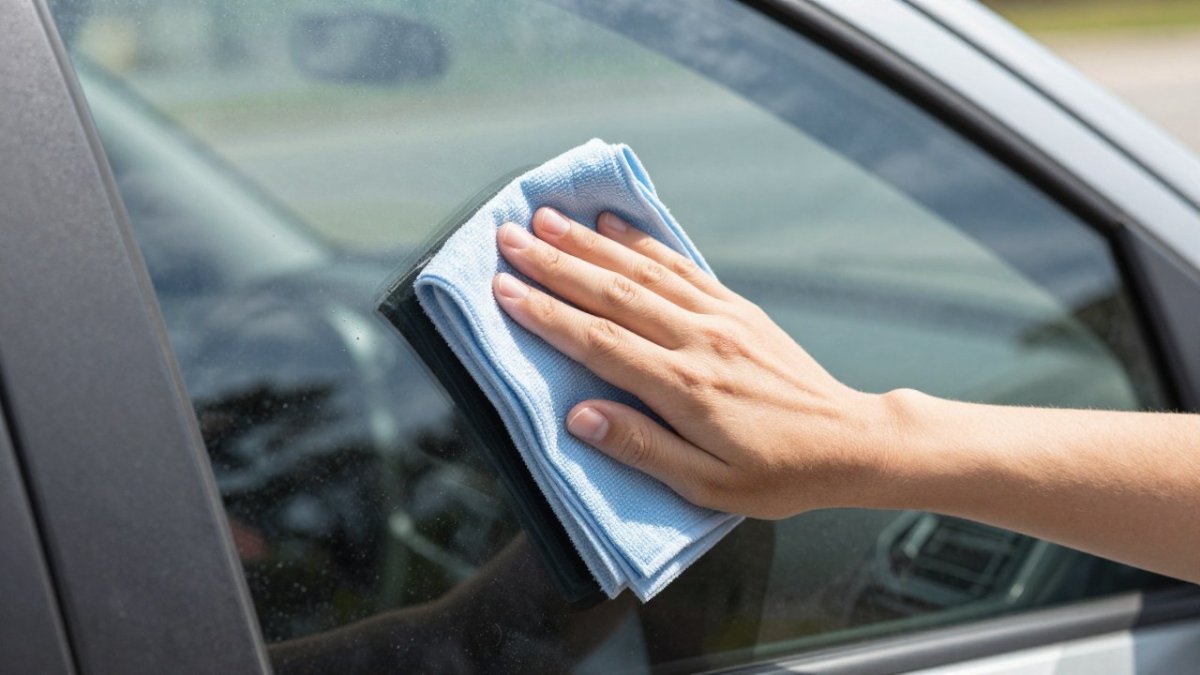
- Start with a dry dusting. Wipe loose dirt off with a soft microfiber cloth before adding any liquid.
- Spray the cleaner onto the cloth, not the glass. Overspraying can seep into the door panel and edges.
- Wipe in straight lines. Use the same direction on each pass. Circular motions can leave swirl marks.
- Dry the glass with a second clean cloth. Do not let the cleaner sit on the film.
- Check the edges last. Clean them gently to avoid lifting the film.
Work in the shade when you can. Sun heats the glass and makes cleaner dry too fast, which leaves streaks.
The steps below summarise the cleaning method the article recommends for keeping ceramic tint free of scratches.
| Step | What to do | Note |
|---|---|---|
| 1. Dry dusting | Wipe loose dirt off with a soft microfiber cloth | Before adding any liquid |
| 2. Apply cleaner | Spray the cleaner onto the cloth, not the glass | Overspraying can seep into edges |
| 3. Wipe | Wipe in straight lines | Circular motions leave swirl marks |
| 4. Dry | Dry the glass with a second clean cloth | Do not let cleaner sit on film |
| 5. Edges | Clean the edges last, gently | Avoids lifting the film |
Tools and Habits That Cause Scratches on Tint
Most scratches are caused by tools and habits, not by normal use. Watch for these common culprits:
- Rough cloths. Bath towels, shop rags, and scrub pads contain grit or fibers that scratch.
- Dirty cloths. A cloth that has picked up sand or grit will drag that grit across the film.
- Rings and keys. Jewelry and key rings can scrape the surface during cleaning.
- Sunshades and clips. Hard plastic or metal can rub against the film when installed or removed.
- Ice scrapers. Scraping ice off tinted glass can leave marks. Warm the glass or use a soft tool instead.
Keep a dedicated set of clean microfiber cloths for your windows. Wash them separately and skip fabric softener, which can leave a residue.
How to Remove Scratches From Window Tint
Not every mark on ceramic tint is a scratch. Before you rub, polish, or call anyone, identify what you are looking at. The treatment depends on whether the damage is in the film’s top coat, in the ceramic layer, or at the adhesive edge.
Step 1: Clean the glass first. Dirt and dried cleaner residue can look like scratches. Wash the inside surface with a non-ammonia cleaner and a clean microfiber cloth, then dry it with a second cloth. Inspect the glass at an angle in daylight. Many marks disappear at this stage because they were never scratches.
Step 2: Classify the mark. Run a fingernail lightly across it. If your nail glides over the surface, it is likely a surface scuff in the top coat. If your nail catches, the film itself is cut or gouged. A common pattern is that surface scuffs appear as faint, hazy lines that shift with the light, while true scratches stay visible from every angle and may show a slight color change.
Step 3: Check the edges and corners. Edge lifting, bubbling, and peeling are not scratches, but they are often reported as scratch damage. Look along the window perimeter and around defroster lines. If the film is lifting at an edge, cleaning or buffing will make it worse.
Step 4: Try the mildest fix first. For a light surface scuff, buff gently with a clean, dry microfiber cloth. Do not use polishing compounds, toothpaste, or abrasive creams on ceramic tint; these can dull the film’s top coat and leave a permanent haze. If the mark does not fade with a dry cloth, stop. Persistent blemishes often indicate that the film requires a more comprehensive maintenance routine, such as the protocols outlined by Coraltint to ensure the edges remain securely bonded to the glass.
Step 5: Know what professionals can and cannot fix. Light surface scuffs can sometimes be improved with a professional-grade film polish, but deep gouges, cuts, and scratches through the ceramic layer generally cannot be repaired in place. The practical options are generally to leave a small cosmetic scratch alone, or to ask your installer about replacing the affected pane or removing the film.
Step 6: Get a quote before you commit. Ask the shop whether they will repair, replace the pane, or remove and reinstall. Pricing depends on the window size, the film type, and whether old adhesive must be stripped. See what professional window tint removal costs for a breakdown of what to expect.
Watch out: rubbing a deep scratch can lift the film edge and turn a cosmetic mark into a peeling failure, so stop as soon as the cloth catches or the film starts to bubble.
If the scratch is on a window you are about to sell or trade, document it with a photo. For a full replacement or removal, ask for a written quote so you can compare shops.
Booking a Scratch-Resistant Tint Job in Wilmington
Knowing how to protect ceramic tint from scratches starts before the film touches the glass. The installer’s prep, the film’s construction, and the warranty terms all matter more than the brand name on the box. Use this section as a booking checklist so you can compare shops on substance rather than price alone.
What makes an installation more scratch-resistant
- Glass prep. The glass must be scraped, cleaned, and freed of grit before film is applied. Trapped grit becomes a permanent high point that scratches the film from underneath.
- Clean, dust-free workspace. A clean, enclosed work area reduces the chance of airborne debris landing under the film.
- Proper trimming and edge sealing. Edges that are cut short or left unsealed lift over time, and lifted edges catch cloths and rings.
- Film construction. Ask whether the film has a scratch-resistant hard coat and how the manufacturer describes its abrasion resistance.
- Curing guidance. A shop that gives you written curing and cleaning instructions is more likely to stand behind the install.
Questions to ask before you book
- What film brand and product line are you installing, and does it carry a manufacturer’s scratch-resistant hard coat?
- What is the visible light transmission of the film, and will the result comply with the window tint rules that apply in your area?
- What does your warranty cover, and for how long?
- Do you provide written curing and cleaning instructions?
- Will you replace a single pane if one window is damaged, or is the warranty limited to the full job?
North Carolina compliance matters for resale and inspection
Aftermarket window tint on passenger vehicles is subject to visible light transmission rules in many jurisdictions. Because the rules and enforcement details can change, verify the current requirements with your local motor vehicle authority or a licensed installer before you book. A compliant install protects you at inspection time and makes the vehicle easier to sell or trade. An overly dark or non-compliant tint can create a problem at sale, even if the film itself is in good condition.
Warranty terms to compare
A lifetime warranty is worth reading closely. Ask whether the warranty covers labor, whether it transfers to a second owner, and whether scratch damage from cleaning or ice scraping is excluded. Warranties generally exclude damage caused by improper cleaning, so the cleaning habits in this guide matter.
Local climate and practical benefits
In coastal southeastern North Carolina, heat, glare, and UV exposure are everyday concerns. Ceramic film’s infrared rejection and UV blocking are the features that make the film worth protecting. To see how it compares with the privacy glass already in your vehicle, read ceramic window tint vs factory privacy glass. Treat those benefits as comfort and preservation features rather than a guaranteed resale premium.
Coastal Glass Tinting provides automotive, residential, and commercial window film in the Southeastern North Carolina area. When you request a quote, ask for the warranty terms in writing and the curing and cleaning instructions for your specific install. That paperwork is what lets you protect the film and back up its condition later.
Frequently Asked Questions
Can ceramic window tint get scratched?
Yes. Ceramic window tint can pick up light swirls and micro-scratches from rough cloths, grit, and abrasive pads, though it resists these better than many dyed films. Ceramic coating guidance from BGI Tint notes that it may resist light swirls and micro-scratches but does not prevent rock chips, key scratches, or deep gouges. Treat the film gently, wipe with soft microfiber, and keep grit off the glass during cleaning to limit visible damage over time.
What should you use to clean ceramic window tint?
Use a non-ammonia glass cleaner sprayed onto a soft microfiber cloth, not directly onto the film, and wipe gently in one direction. Non-ammonia glass cleaner and a soft cloth are generally recommended, and abrasive pads should be avoided. Avoid paper towels, scrub brushes, and household cleaners containing ammonia, which can break down the film edges and cause discoloration over time.
How do you remove a scratch from window tint?
Light surface marks may improve with a gentle polish, but deep scratches generally mean the film needs to be replaced. Start with a clean window and a soft cloth, then check whether the mark sits on the film or the glass. Pricing depends on the vehicle and film type, so request a quote from your installer for current costs.
How soon can you clean windows after tint installation?
Wait until the film has finished curing before cleaning it, since moisture trapped under fresh film can cause haze or bubbles. Curing time varies with film type, climate, and weather, and the installer usually gives a specific wait period. Follow the timeline your installer provides, and ask for their exact curing window.
