
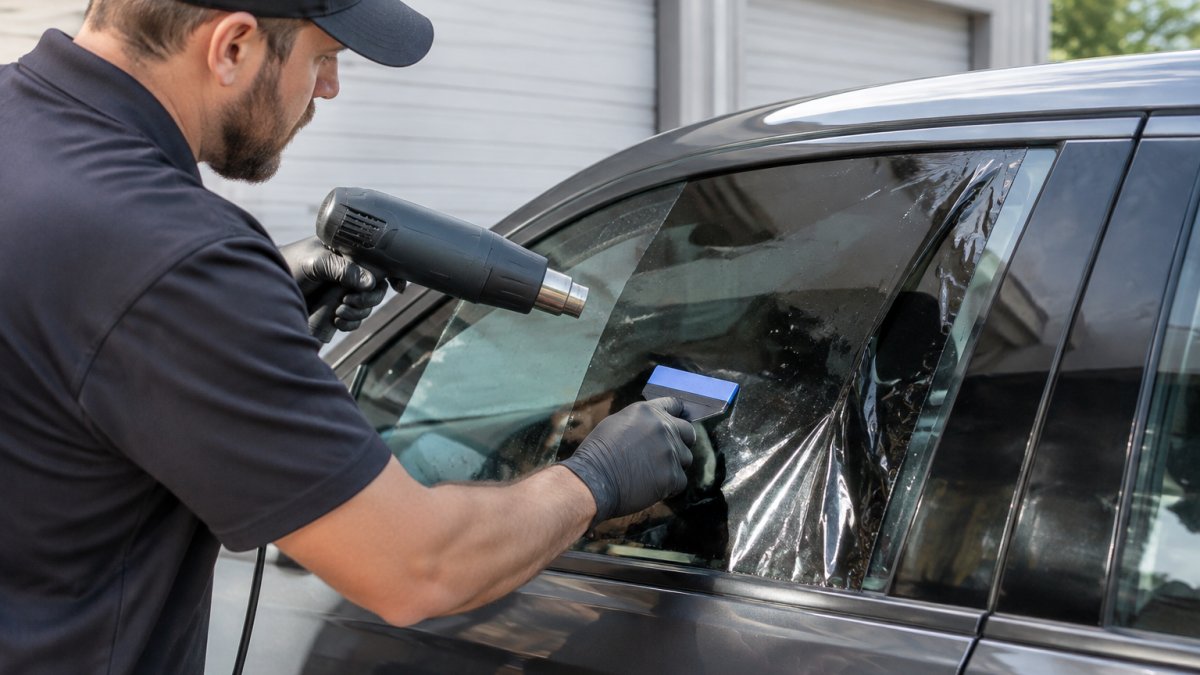
Last Updated: November 4, 2026
Quick Summary
Professional window tint removal cost generally runs from $2.00 to $2.50 per square foot for flat glass and $150 to $350 for a full vehicle, according to Window Film Depot’s 2026 removal pricing benchmark. Film type, glass condition, and vehicle complexity move the price more than anything else.
- Front door window removal usually runs $40 to $80 per pair, while rear glass removal often starts around $129.
- Residential and commercial film removal is priced by square footage, with national averages of $2.50 to $6.00 per square foot.
- Dyed film is the easiest to remove because its adhesive layer releases in large sheets, while metallized and ceramic films bond harder.
- A bubbling, purple, or delaminating rear window is the slowest and most expensive removal job of all.
- Bundling removal with new film is almost always cheaper than paying for two separate visits.
Table of Contents
- Average Cost of Professional Window Tint Removal
- What Drives Window Tint Removal Cost
- How Long Does Window Tint Last and Why Age Raises Removal Cost
- Dangers of DIY Window Tint Removal
- The Professional Removal Process: Adhesive Residue and Defroster Line Protection
- Tint Removal and Replacement Cost: Bundled Pricing
- Book Your Tint Removal Consultation in Wilmington, NC
- Frequently Asked Questions
Average Cost of Professional Window Tint Removal
The cost of professional window tint removal in the United States generally runs from $2.00 to $2.50 per square foot for flat glass and $150 to $350 for a full vehicle, according to Window Film Depot’s 2026 removal pricing benchmark. At Coastal Glass Tinting, we’ve been serving the Southeastern North Carolina area since 1980, and the honest answer is that no single number fits every job. Film type, glass condition, and vehicle complexity move the price more than anything else.
Below, we break down what each type of removal actually costs and what pushes a quote up or down.
Automotive Tint Removal Pricing
Full-vehicle automotive tint removal typically costs $150 to $350 for sedans and SUVs, based on industry pricing data compiled in 2026. Partial jobs cost far less. Front door window removal usually runs $40 to $80 per pair, while rear glass removal often starts around $129 because back glass is curved, tinted in one piece, and sits over the defroster grid.
Residential and Commercial Film Removal Pricing
Residential and commercial film removal is priced by square footage. National averages run $2.50 to $6.00 per square foot, per Dataintelo’s window tint removal market report, with 95% of flat-glass projects quoted between $2.00 and $2.50 per square foot. Larger commercial jobs often land at the lower end because setup costs spread across more glass.
| Service Type | Typical Price Range | Priced By |
|---|---|---|
| Full vehicle (sedan/SUV) | $150 – $350 | Per vehicle |
| Front door windows | $40 – $80 per pair | Per pair |
| Rear windshield | From $129 | Per window |
| Residential flat glass | $2.50 – $6.00 | Per square foot |
| Commercial flat glass | $2.00 – $2.50 | Per square foot |
What Drives Window Tint Removal Cost
Most removal quotes are decided by five variables, and a shop that quotes a flat rate is usually averaging them into one number. Knowing which variables apply to your glass tells you whether a quote is fair or padded.
Film type. Dyed film is the easiest to remove because its adhesive layer is relatively soft and releases in large sheets. Metallized and ceramic films bond harder and come off in smaller pieces, which adds labor time. Carbon film sits in the middle. If you paid more for the film originally, expect to pay somewhat more to take it off.
Adhesive strength and age. Fresh film peels in one piece. Film that has baked onto glass through years of Southern sun has cured adhesive that no longer releases cleanly, so the technician has to soften it with heat and steam and scrape it in stages. A bubbling, purple, or delaminating rear window is the slowest job of all.
Glass complexity. A flat side window is quick work. A curved rear windshield with a defroster grid is not, because the technician has to work around the grid rather than across it. Curved quarter glass and heavily contoured back glass on SUVs and hatchbacks add time for the same reason.
Number of panes and access. A full vehicle means every pane, including the small quarter windows many drivers forget. Residential and commercial jobs scale with square footage and with how much furniture, shelving, or landscaping has to be moved to reach the glass.
Condition of the glass underneath. Film that has been on long enough to pit or etch the glass may need polishing after removal, which is a separate line item. Chipped edges and existing scratches also slow the technician down because they limit how much pressure can be applied.
Watch out: a quote that is dramatically lower than the rest often excludes adhesive cleanup or assumes the film will peel in one piece. Ask whether residue removal and glass inspection are included before you compare numbers.
Pricing models for removal vary. Ask any provider, including Coastal Glass Tinting, which model they use before you commit, and ask what happens to the price if the film comes off faster or slower than expected.
How Long Does Window Tint Last and Why Age Raises Removal Cost
Quality window film can last for many years before it starts to fail, and the older it gets, the more it can cost to remove. Sun exposure breaks down the adhesive over time. Once the film starts to bubble, turn purple, or delaminate, the adhesive has cured onto the glass and no longer peels in one piece.
That’s why a bubbling rear window is a more expensive removal than a clean one. If your film is already showing these signs, our guide on how long window tint lasts explains the warning signs and what they mean for removal timing.
Dangers of DIY Window Tint Removal
DIY tint removal is the single biggest way homeowners and drivers turn a small job into an expensive one. The two failure points are the rear defroster grid and the glass itself. A scraper dragged at the wrong angle snaps defroster lines, and those lines cannot be repaired, only replaced with a new rear window.
Chemical solvents sold for home use can also stain interior trim, damage paint protection, and leave adhesive residue that never fully comes off. Professionals use controlled heat, steam, and professional-grade tools to soften adhesive without touching the grid. The $150 to $350 a shop charges for full vehicle removal is usually less than the cost of one replacement rear window.
The Professional Removal Process: Adhesive Residue and Defroster Line Protection
A proper removal follows a set sequence, and each step exists to protect the glass. The technician starts by heating the film with a heat gun or steamer to soften the adhesive, then lifts a corner and peels at a controlled angle. Razor blades and scrapers are used only on flat glass, never over a defroster grid. Any adhesive residue left behind is dissolved with a solvent and wiped clean before the glass is inspected.
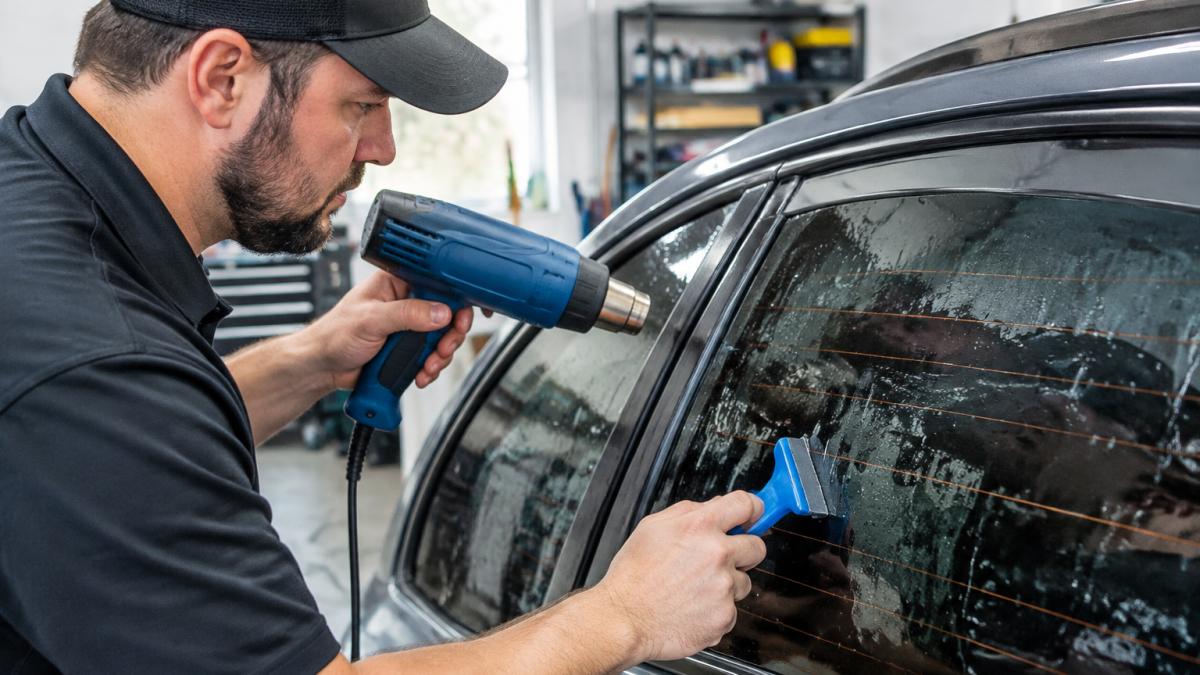
Adhesive residue management. The glue left behind after the film comes off is the part DIYers underestimate. On a clean removal, most of the adhesive leaves with the film and the remainder wipes off with a solvent. On an aged removal, the adhesive has cured into a gummy layer that smears rather than lifts. Professionals handle it in stages: soften with heat or steam, lift what will release, then dissolve the remainder with a professional-grade solvent and wipe with a fresh cloth before it redries. Reusing a loaded cloth is a common mistake because it spreads adhesive back onto clean glass. The residue step is also where interior trim gets damaged, so technicians mask or protect adjacent surfaces before applying solvent.
Defroster line protection. The rear grid is a set of thin metallic lines bonded to the glass, and it takes almost no pressure to break one. A broken line cannot be repaired in place; the usual fix is a new rear window, which is why the rear glass carries the highest removal price on most vehicles. A technician works around the grid, never across it, and uses heat and steam rather than blades to release film over the grid. On rear glass, the film is often removed in sections so the technician can keep the grid in view the whole time.
Watch out: a shop that quotes rear glass at the same price as side glass, or that plans to use a razor blade on the back window, is signaling that defroster protection is not part of its process. Ask how the shop handles the grid before you book.
If your current film is already bubbling or peeling, our guide on preventing window film bubbling and peeling covers the steps that stop it happening again after replacement.
Tint Removal and Replacement Cost: Bundled Pricing
Bundling removal with new film is almost always cheaper than paying for two separate visits. Many shops now offer same-day removal and re-tinting, per Garage 717’s 2026 pricing guide, because the glass is already clean and prepped. One consumer on r/WindowTint reported paying $782 total for full vehicle removal plus new ceramic tint, which shows how the two line items add up.
Removal alone for that same vehicle would typically run $150 to $350. The rest goes to the new film and installation. If you’re replacing film anyway, ask for a bundled quote rather than two separate ones.
Book Your Tint Removal Consultation in Wilmington, NC
Wilmington’s sun is hard on window film, and salt air near the coast doesn’t help. If your tint is bubbling, turning purple, or past its prime, the cheapest path is usually a professional removal before the adhesive cures further. Coastal Glass Tinting has served Southeastern North Carolina since 1980, and every product we install is backed by a lifetime warranty on materials and workmanship.
Ready to move? Visit our auto tinting service page for your vehicle, our residential tinting page for your home, or our commercial tinting page for your property. Get a free quote from Coastal Glass Tinting.
Frequently Asked Questions
How much do they charge to take off window tint?
Professional window tint removal cost varies by glass size and film condition. Rear windows are typically more involved due to the defroster grid. Request a written quote from Coastal Glass Tinting to get an exact figure for your glass.
How long does window tint last before it needs removal?
Quality window film can last many years, but film can degrade over time, especially under strong sun exposure. Once film degrades, the adhesive cures harder and removal can become more labor intensive. Inspecting your film periodically helps you plan for removal or replacement before it fails completely.
Is it safe to remove window tint from a car with a rear defroster?
The rear defroster grid is fragile, and removal can damage its thin conductive lines. If your rear glass has a defroster, consider hiring a professional to avoid expensive repairs. The dangers of DIY window tint removal include defroster damage, adhesive residue left on the glass, and scratched glass surfaces.
Does Coastal Glass Tinting offer tint removal services in Wilmington?
Coastal Glass Tinting has served Southeastern North Carolina since 1980 and backs its materials and workmanship with a lifetime warranty. For a free quote tailored to your glass, contact the shop directly.
Removing failing film is a job where the wrong tool costs more than the right technician. If your tint is bubbling, purple, or peeling, don’t wait for the adhesive to cure harder. Coastal Glass Tinting offers in-house removal and replacement backed by a lifetime warranty on materials and workmanship, with service across Southeastern North Carolina since 1980. Get started with Coastal Glass Tinting and book a free removal quote today.
