
Last Updated: October 31, 2026
Quick Summary
Ceramic tint curing in cold weather takes longer because the water trapped under the film needs warmth to evaporate, and cold slows that process without stopping it. Window tint can take up to 7 days to dry in cooler or cloudy weather, and cold, damp conditions can stretch drying even further.
- Winter curing may take longer than summer curing, and that is not a reason for concern.
- Wait at least 3 to 7 days before rolling windows down after a winter install.
- Small bubbles and a faint hazy look in the first days are normal trapped moisture.
- Park in daylight when you can, since sun helps curing.
- If the film still looks hazy after two weeks in cold weather, call the installer.
Table of Contents
- Why Ceramic Tint Cures Slower in Cold Weather
- How Long Does Window Tint Take to Dry in Cooler Months?
- Can You Tint Car Windows in Cold Weather?
- Window Tint Bubbles After Installation: Normal or a Problem?
- How to Care for Newly Tinted Windows in Winter
- How to Tell Your Ceramic Tint Is Fully Cured
- Get a Free Quote for Cold-Weather Ceramic Tint Installation
- Frequently Asked Questions
Why Ceramic Tint Cures Slower in Cold Weather
Ceramic tint curing in cold weather takes longer because the water trapped under the film needs warmth to evaporate. Cold slows that process down. It does not stop it.
Here is the part most drivers get wrong: they assume a cold snap ruined the job. It usually didn’t. The film is still working, just on a slower schedule.
Winter jobs behave differently from summer ones. That difference is predictable once you understand what is happening under the glass.
The role of moisture and temperature in film adhesion
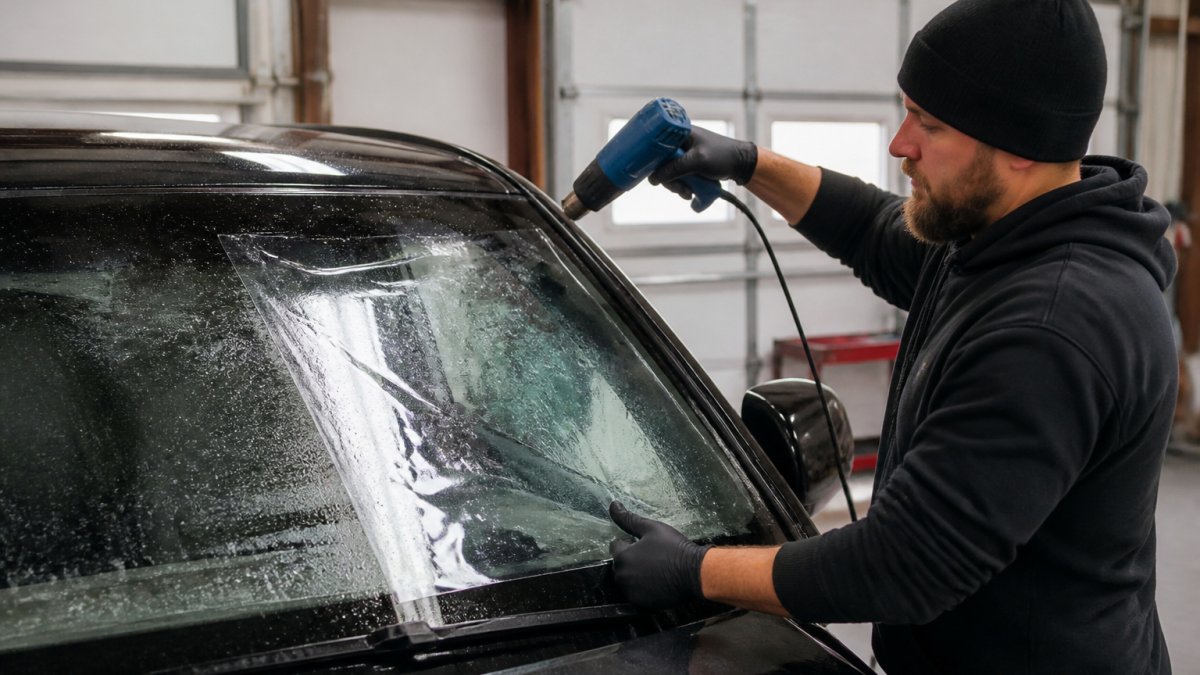
Window film goes on wet. Installers spray a slip solution onto the glass so the film can be positioned and squeegeed flat. That solution has to escape through the film over the following days and weeks.
Heat speeds up evaporation. Cold slows it. Humidity slows it further.
Ceramic tint is a window film made with ceramic nanoparticles that block heat and UV rays without using metal layers. Those particles sit in an adhesive-backed film that cures as moisture leaves.
So curing is not the adhesive “setting.” It is water leaving. Lower temperatures mean less evaporation, and that is the whole story.
How Long Does Window Tint Take to Dry in Cooler Months?
Window tint can take up to 7 days to dry in cooler or cloudy weather, according to Rapid Window Tinting’s window tint care guide. Warmer, drier conditions shorten that window considerably.
Some published installer guidance goes longer. LM Car Detailing’s notes on ceramic film puts ceramic curing at 5 to 7 days and warns that cold or humid climates can stretch drying further.
What that means in practice:
- Summer, full sun: often a few days
- Mild weather: about a week
- Cold, damp, overcast: longer, and no one can give you an exact date
- Garaged car in winter: slower than a car parked in daylight
The honest answer is that cure time is a range, not a deadline. Anyone quoting you a precise day in January is guessing.
Can You Tint Car Windows in Cold Weather?
Yes, you can tint car windows in cold weather. Cold slows curing, but it does not prevent it. Sun Control Wisconsin’s guidance on winter tinting makes this point directly: winter curing may take longer, and that is not a reason for concern.
If you are weighing film types before booking, our comparison of ceramic window tint vs factory privacy glass covers how each behaves.
Temperature thresholds installers watch
There is no single national cutoff, and any shop that quotes you one is oversimplifying. What installers actually watch:
- Shop temperature: film is applied indoors, so the bay matters more than the outdoor forecast
- Film flexibility: some films get stiff in the cold and need careful handling
- Cure window: how many cold nights the car will sit through before the film settles
- Moisture: damp winter air keeps water under the film longer than dry cold
Watch out: the real risk in cold weather is not the film failing. It is the driver rolling the window down too soon because the film “looks dry.” It isn’t.
Window Tint Bubbles After Installation: Normal or a Problem?
Small bubbles and a faint hazy look in the first days are normal. They are trapped moisture working its way out. Larger bubbles, or bubbles that appear weeks later, are not normal.
Here is how to tell them apart:
- Fine, scattered dots or a slight haze: normal during curing, especially in cold weather
- Small water pockets near edges: common, usually gone within a week or two
- Big bubbles, creases, or peeling edges: an installation issue, not a curing issue
- Bubbles that show up after the film looked clear: also an installation issue
The difference matters because one resolves itself and the other needs the installer. If you want to avoid the second category entirely, these proven steps to prevent window film bubbling and peeling cover what actually causes it.
One more thing nobody tells you: cold weather makes normal curing bubbles last longer, so a winter install can look worse on day three than a summer install ever does. That is expected.
How to Care for Newly Tinted Windows in Winter
Leave the film alone for the first week. That is the single most useful rule for cold-weather tint care.
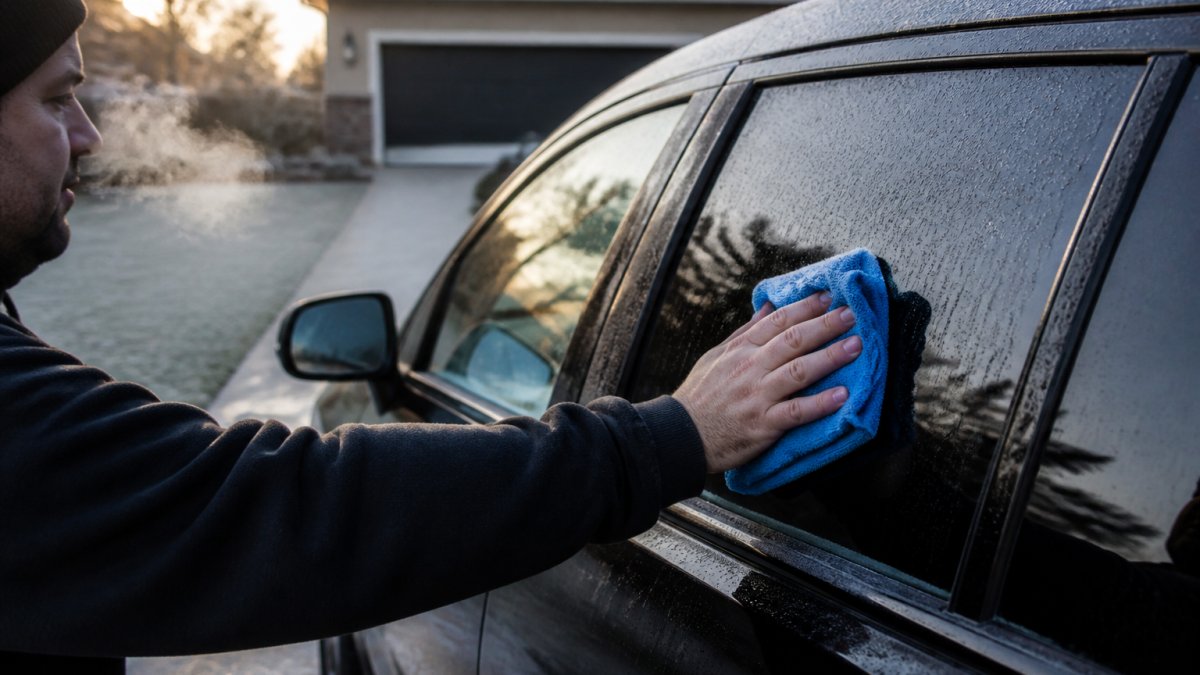
A practical winter care routine:
- Wait at least 3 to 7 days before rolling windows down
- Skip the car wash for the first week
- Do not use ammonia-based cleaners, ever
- Wipe with a soft microfiber cloth and a film-safe cleaner
- Park in daylight when you can, since sun helps curing
- Avoid scraping ice near window edges
- Do not press hard on the film to “check” if it is dry
Cold mornings tempt people to scrape frost aggressively. Keep the scraper off the glass where the film sits. A scratched film is not a warranty issue, it is damage.
Ceramic film also protects your interior long after curing. Our breakdown of how ceramic tint prevents interior fading explains the UV side of that.
How to Tell Your Ceramic Tint Is Fully Cured
Ceramic tint is generally fully cured when the film looks clear, the slight haze is gone, and no water pockets remain. Cold weather can extend that timeline.
Use this checklist before you call it done:
| What to Check | Cured | Not Yet Cured |
|---|---|---|
| Clarity | Clear, sharp view out | Faint haze or milky look |
| Bubbles | None, or tiny edge specks gone | Scattered dots still present |
| Edges | Flat and sealed | Lifting or soft |
| Surface | Smooth to the touch | Slightly tacky or uneven |
| Timing | Past the installer’s stated window | Still inside the first week |
If the film still looks hazy after two weeks in cold weather, call the installer. That is a conversation, not a panic.
Get a Free Quote for Cold-Weather Ceramic Tint Installation
Booking a winter install is straightforward once you know what to expect. Before you book, learn how to tell if window tint is legal so you can confirm your tint will be legal. The film will cure slower, look slightly hazy for a few days, and settle on its own.
Coastal Glass Tinting has served Southeastern North Carolina since 1980. Our products are handpicked by the world’s largest window film manufacturer, and our lifetime warranty covers materials and workmanship. If you are searching for ceramic tint in the Wilmington area, contact us for a quote and to discuss timing for your vehicle.
Want to know what ceramic film does for interior heat before you commit? Read our guide on whether ceramic tint keeps your car interior cool.
Frequently Asked Questions
Can ceramic window tint be installed in cold weather?
Yes. Cold weather slows curing but does not stop it. Cold weather can lengthen curing time, and the film still bonds to the glass. Ask your installer about bay temperature and film-specific cure guidance before booking.
How long does ceramic tint take to cure in cold weather?
Cure times vary with conditions, and cold or humid weather can extend drying. Follow the film manufacturer’s specific cure-time instructions for the most accurate window.
Is it normal to see bubbles or haze while window tint cures?
Yes. Small water bubbles and a slight haze are part of the normal curing process. Some moisture can remain trapped under the film and evaporates over days. Do not poke, press, or roll down the windows to speed it up. If bubbles persist past the cure window or turn milky and hard, contact the installer. Coastal Glass Tinting backs materials and workmanship with a lifetime warranty, so defects are covered.
How should I care for newly tinted windows during a Wilmington, NC winter?
Allow the film to cure fully before cleaning, and use only a soft microfiber cloth with mild soap and water. Skip ammonia-based cleaners, which can damage the film. Avoid scraping frost or ice off tinted glass, and give the film the full cure window before judging the final look.
Cold weather does not have to delay your tint. It just changes the timeline. Coastal Glass Tinting installs ceramic film year-round in Wilmington, NC, backed by a lifetime warranty on materials and workmanship and products from the world’s largest window film manufacturer. Get a free quote from Coastal Glass Tinting and get your windows protected before the next cold snap.
