
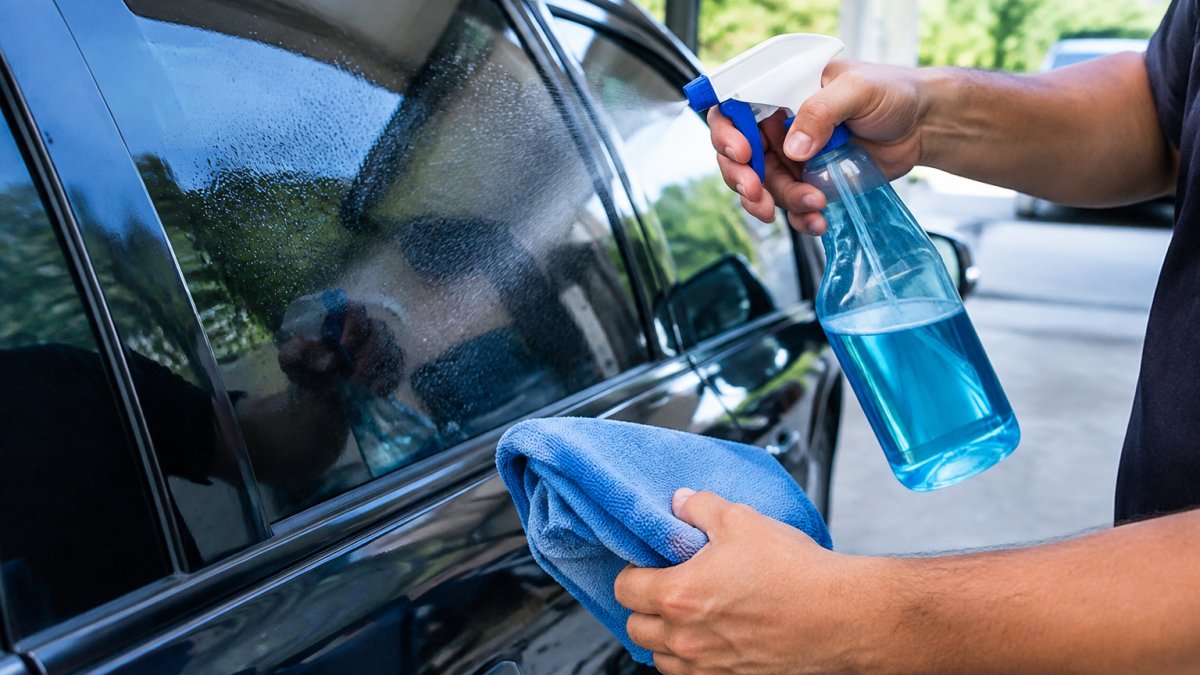
Last Updated: November 4, 2026
Quick Summary
Safe cleaners for ceramic window tint are ammonia-free, pH-balanced glass cleaners made for tinted surfaces, applied with a soft microfiber towel. Avoid ammonia-based products, abrasive cleaners and harsh solvents, since they can cause the film to lift from the glass.
- Choose cleaners labeled ammonia-free or safe for tinted windows.
- Avoid ammonia-based glass cleaners because they can cause delamination.
- Wait for the curing period, at least 48 hours per 3M guidance, before first cleaning.
- Wipe with a soft microfiber towel, never paper towels or scrub pads.
- Check window edges every few months for bubbles, lifting or peeling.
Table of Contents
- Why Ceramic Tint Needs Different Cleaning Than Standard Film
- Why Ammonia-Based Cleaners Damage Window Film
- Ammonia-Free Glass Cleaner for Cars: Products That Are Safe to Use
- How Long Does Window Tint Last Before It Needs Attention?
- Step-by-Step: How to Clean Ceramic Window Tint Safely
- Ceramic Tint Maintenance Tips for Long-Term Clarity
- Book Your Ceramic Tint Care Consultation in Wilmington, NC
- Frequently Asked Questions
Why Ceramic Tint Needs Different Cleaning Than Standard Film
Ceramic window tint is a nano-ceramic film that blocks heat and infrared rays without the metal layers found in older films. That makes it a different material to care for, and it needs safe cleaners chosen for the job. The cleaning rules for ceramic film are not the same as they are for standard dyed film.
Most people use the same spray bottle on every window. With ceramic film, that habit can shorten the life of the tint. The film is tougher against scratches than many people expect, but its surface still reacts to harsh chemicals, abrasive towels and early moisture.
Scratch resistance does not mean chemical resistance, though. Cleaners that work on bare glass can still attack the adhesive and film layers underneath.
The safe approach comes down to three habits:
- Wait for the film to cure before the first cleaning.
- Use mild, pH-balanced cleaners made for tinted surfaces.
- Wipe with a soft microfiber towel, never a paper towel or scrub pad.
Why Ammonia-Based Cleaners Damage Window Film
Ammonia is the ingredient most likely to hurt window tint. Many standard glass cleaners contain it, and industry guidance warns that ammonia-based products can cause film and adhesive delamination, according to Keystone Detail window film care guidance.
Delamination is the term for film pulling away from the glass. The first sign is usually a small bubble or a lifted edge along the border. Once the adhesive starts to separate, the bubble tends to spread, and the film may need to be removed and replaced.
Ammonia does not always cause damage right away. Repeated use can slowly weaken the adhesive, so a window cleaned with a strong cleaner every week may look fine for months and then start to lift.
Read the label before you buy. If the ingredient list includes ammonia, skip it on your tinted windows.
Ammonia-Free Glass Cleaner for Cars: Products That Are Safe to Use
An ammonia-free glass cleaner is the easiest choice for car windows with ceramic tint. The label should say “ammonia-free” or “safe for tinted windows.” Look for a pH-balanced formula, since a neutral pH is gentler on film edges and adhesive.
Brands we see most often include 3M automotive window film care instructions, which advises waiting before cleaning and avoiding harsh chemicals on new film. Their guidance is a good starting point for any cleaner you choose.
Whichever product you pick, avoid these:
- Ammonia-based glass cleaners
- Cleaners with abrasive particles
- Strong solvents such as acetone
- Paper towels and rough sponges
For more on the lifespan of a good tint job, see our [article: How Long Does Window Tint Last | page:3].
How Long Does Window Tint Last Before It Needs Attention?
Ceramic tint can last many years with proper care, but it does need attention over time. Most problems start with the edges, where moisture and dirt collect. Check the border of each window every few months.
Watch for these signs that the film needs professional attention:
- Bubbles or lifted corners
- Purple or hazy patches
- Scratches that catch your fingernail
- Peeling along the edges
Small issues caught early are easier to fix. A lifted corner can often be repaired, while a large bubble may mean replacing the film on that pane.
Your curing period also matters. 3M’s product care guidance recommends waiting at least 48 hours before cleaning new windows, and some installers advise waiting longer. Follow your installer’s timing for the best result.
Step-by-Step: How to Clean Ceramic Window Tint Safely
Follow these steps for a clean, safe finish every time.
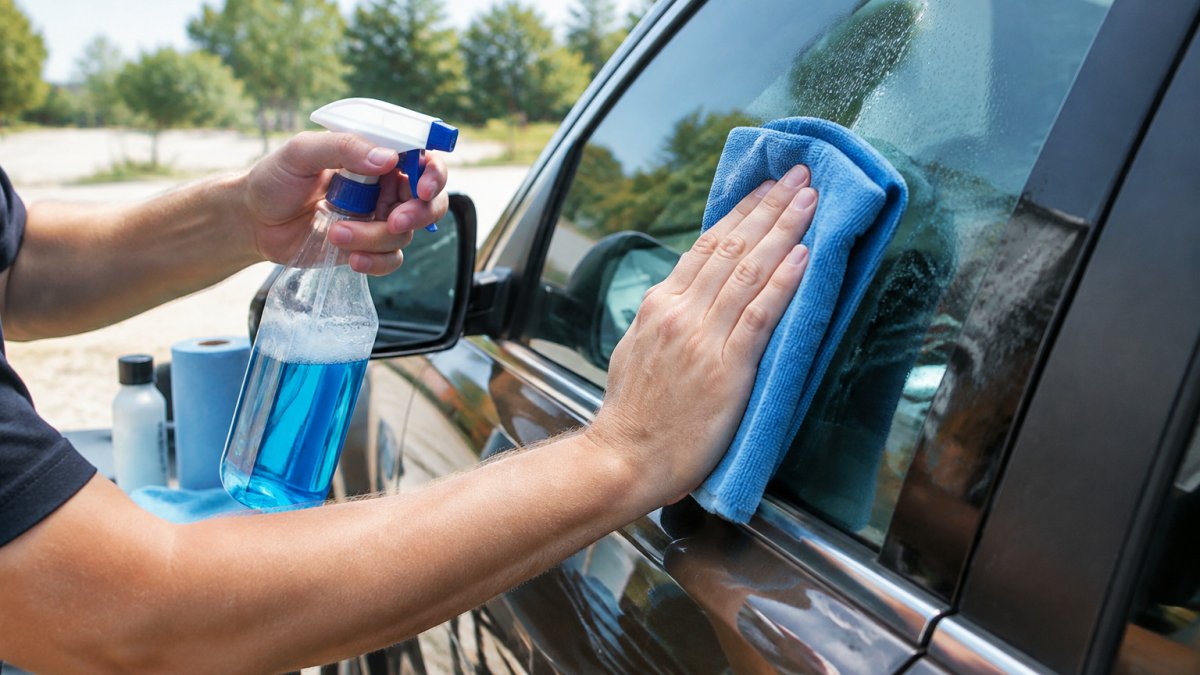
- Wait for the cure. Do not clean new tint until the curing period is over. Check your installation paperwork for the timing.
- Gather your supplies. You will need a spray bottle, a soft microfiber towel, and an ammonia-free cleaner or a mild soap and water mix.
- Spray the towel, not the glass. Lightly dampen the microfiber so no liquid runs down into the film edges.
- Wipe in straight strokes. Work from top to bottom, using light pressure.
- Dry with a second towel. A clean, dry microfiber leaves a streak-free finish.
- Check the edges. Look for any lifting or bubbles and note them for your installer.
Clean tint on a regular schedule, about once a week or when dirt builds up. Avoid cleaning in direct, hot sun, since fast-drying cleaner can leave residue.
The article’s cleaning routine breaks down into a few clear steps, with timing and frequency noted along the way.
| Step | What to do | Time or frequency |
|---|---|---|
| Wait for the cure | Do not clean new tint until curing ends | Check installation paperwork |
| Gather supplies | Spray bottle, microfiber towel, ammonia-free cleaner | Before each cleaning |
| Spray the towel | Lightly dampen the microfiber, not the glass | Every cleaning |
| Wipe | Straight strokes from top to bottom, light pressure | Every cleaning |
| Dry | Use a second clean, dry microfiber | Every cleaning |
| Check the edges | Look for lifting or bubbles and note them | Each cleaning |
Ceramic Tint Maintenance Tips for Long-Term Clarity
Good habits keep ceramic tint looking new for years:
- Keep a dedicated microfiber towel just for tinted glass.
- Clean the inside of the windows more often than the outside, since cigarette smoke and body oils cause haze.
- Park in shade when you can to reduce heat stress on the film.
- Use a ceramic-based glass cleaner now and then for extra protection.
- Never roll down a freshly tinted window before the cure period ends.
Ceramic film blocks much of the sun’s heat and UV light, which also helps protect your interior from fading. Routine, gentle care with safe cleaners is the simplest way to keep those benefits.
For drivers who want a deeper look at how tint performance holds up, our team at Coastal Glass Tinting is happy to walk through your options. Overview of ceramic window film performance also explains how the technology compares with other film types.
Book Your Ceramic Tint Care Consultation in Wilmington, NC
If you have ceramic tint on your car, home or business and want expert advice on cleaning, inspection or repair, the team at Coastal Glass Tinting can help. We have served Southeastern North Carolina since 1980 and back our materials and workmanship with a lifetime warranty.
Visit our [contact page | page:4] to reach our Wilmington office, or [request a quote | page:5] for your window film project today.
Frequently Asked Questions
Can I use Windex on ceramic window tint?
Standard Windex contains ammonia, and industry guidance warns that ammonia-based cleaners can cause film and adhesive delamination over time. Ceramic tint is more durable than dyed or metalized film, but the adhesive layer is still vulnerable to harsh chemicals. Use an ammonia-free glass cleaner or a simple mix of distilled water and mild soap instead. Follow your installer’s curing guidance before cleaning, and check that any product you choose is labeled ammonia-free before spraying it near the tint.
How often should I clean my ceramic window tint?
Clean ceramic tint whenever it collects dirt, road film, or salt residue, which is common for vehicles and boats in coastal areas. For most drivers, a gentle cleaning every one to two weeks keeps the surface clear without overworking the film. Always use a clean, high-density microfiber towel, and avoid abrasive pads or paper towels that can leave micro-scratches on the film surface.
What ingredients should I avoid in window cleaners for ceramic tint?
Avoid cleaners containing ammonia, which can break down the adhesive and cause bubbling or peeling. Be cautious with strongly acidic products, since some experts advise sticking to mild soap and water rather than vinegar-based solutions for newly tinted glass. Also avoid abrasive additives and harsh solvents. A pH-balanced, ammonia-free formula is the safest choice for ceramic film.
Is it safe to use microfiber cloths on ceramic window film?
Yes, high-quality microfiber cloths are a safe choice for ceramic window film when used correctly. Their soft fibers lift dirt without scratching, and they work well with ammonia-free cleaners. Use a clean towel for each cleaning session, and keep the cloth free of grit, since trapped debris is what usually causes scratches on tinted glass.
