
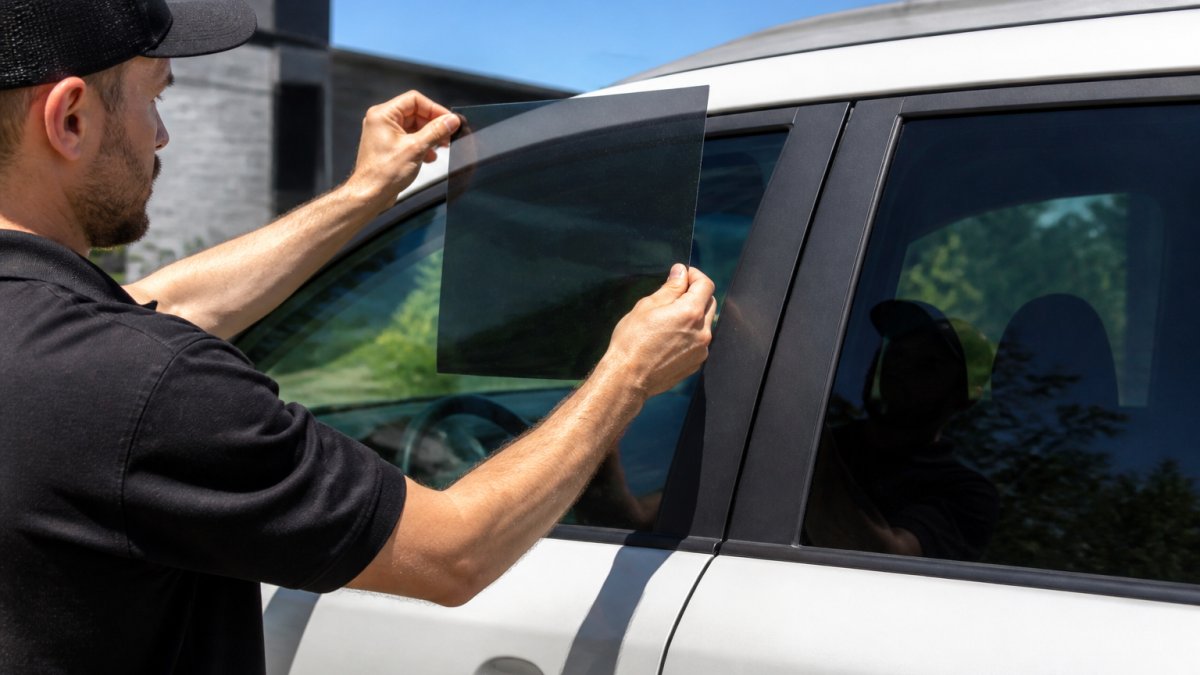
Last Updated: October 23, 2026
Quick Summary
UV protection differences between car windows are dramatic: windshields block approximately 94% of UVA rays using laminated glass, while driver’s-side windows block only 71% using tempered glass. This 23-percentage-point gap exposes drivers to significant cumulative UV damage, especially during long commutes or professional driving.
- Windshields use laminated glass with a polyvinyl butyral layer that blocks 94-96% of UVA rays
- Side windows use tempered glass that blocks 71% or less of UVA rays, leaving 84% of cars with inadequate protection
- Only 15.6% of 32 vehicles studied had side-window UVA blockage above 90%
- Professional ceramic window tint blocks 99% of UVA and UVB rays and works while driving or parked
- Drivers spending 10 or more hours per week behind the wheel face cumulative UV exposure rivaling outdoor workers
Table of Contents
- Do Car Windows Block UV Rays
- Windshield UV Protection vs. Side Windows
- Car Window Tint UV Protection and How It Works
- Window Tint vs. Sunshade for UV Protection
- Health Risks and UV Exposure While Driving
- Interior Fading and Long-Term Damage Prevention
- Identifying and Upgrading Your UV Protection
- Frequently Asked Questions
Do Car Windows Block UV Rays
Yes, car windows block some ultraviolet radiation, but understanding UV protection differences between car windows reveals that protection varies dramatically between your windshield and side windows. Your front windshield blocks approximately 94% of UVA rays, while your driver’s-side window blocks only 71%, according to University of Utah Health research.
The difference comes down to glass composition. Windshields use laminated glass, whose polyvinyl butyral layer absorbs UVA effectively. Side windows use tempered glass, which offers minimal UV protection by design.
UVA penetrates deeper into skin and causes long-term damage like photodermatitis and melanoma risk; UVB causes sunburn but is mostly blocked by standard auto glass. Your windshield’s laminated glass filters UVA, while side windows leave you exposed, a critical oversight on a daily route.
Professional drivers and delivery personnel face cumulative UV exposure that rivals outdoor workers. If you spend more than 10 hours per week driving, your side-window exposure adds up fast. This is where aftermarket UV protection becomes practical, not just cosmetic.
Windshield UV Protection vs. Side Windows
The UV protection differences between car windows are dramatic, and understanding why helps you make better upgrade decisions.
Why Windshields Offer Superior Protection
Windshields are engineered for safety first, UV protection second. The laminated construction, two glass panes bonded with polyvinyl butyral, was designed to prevent shattering during crashes, and that same layer blocks UVA effectively.
Factory windshields typically block UVA rays in the 94-96% range without any additional coating, which is why dermatologists often recommend keeping car windows closed during peak sun hours if you can’t add aftermarket protection to side windows.
The Gap in Side Window Protection
Side windows present a genuine problem for long-term UV exposure. Tempered glass is stronger than laminated glass but lacks the polyvinyl butyral layer, offering minimal UVA blockage, typically 71% or less.
Among 32 vehicles studied, only 5 (15.6%) had side-window UVA blockage above 90%.
Visible light transmission through side windows doesn’t correlate with UV protection. A clear-looking window may block almost no UVA, so testing with a radiometer is the only way to know your actual protection level.
Leaving your side windows down while driving in direct sunlight negates any protection the glass provides. UV rays penetrate open windows, exposing your arm, neck, and the side of your face. Even “safe” driving positions leave your left arm vulnerable during daytime driving.
Factory windshields and side windows offer dramatically different levels of UV protection due to their different glass compositions.
| Window Type | UVA Blockage | Glass Type | Key Difference |
|---|---|---|---|
| Windshield | 94-96% | Laminated | Contains polyvinyl butyral layer |
| Side window | 71% or less | Tempered | Minimal UV protection by design |
| Side windows (best case) | Above 90% | Tempered | Only 15.6% of 32 vehicles studied |
| Side windows (typical) | Below 90% | Tempered | 84% of cars leave drivers exposed |
Car Window Tint UV Protection and How It Works
Window tint adds a protective layer that blocks ultraviolet radiation before it enters your vehicle.
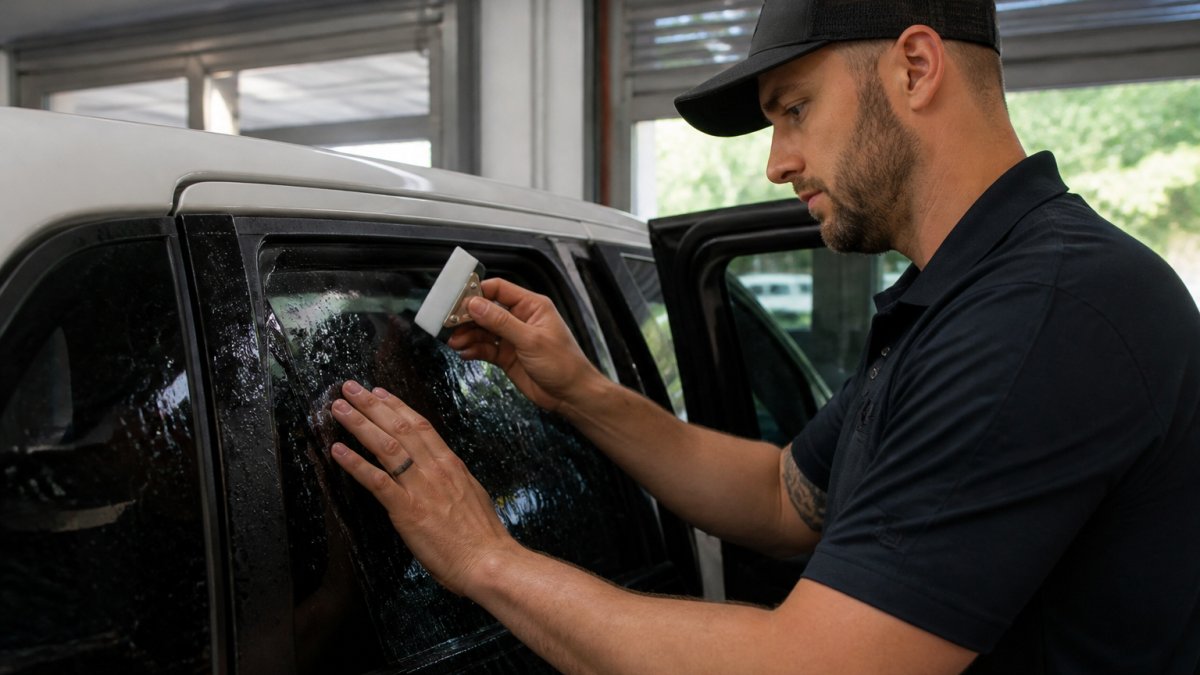
Ceramic film is the most advanced option today.
Installation matters as much as the film. Professional application ensures even adhesion without bubbles or creases that reduce effectiveness.
Clear UV-blocking film is available in most states and blocks 99% of UV without the aesthetic tint.
Quality film also rejects solar heat: blocking infrared radiation keeps your car cooler, reducing air conditioning load and fuel consumption, a practical investment in high-sun climates.
Window Tint vs. Sunshade for UV Protection
Sunshades are temporary, removable barriers that reflect sunlight away from your windows, inexpensive and installation-free. But they only work when your car is parked, providing zero protection while driving.
Window tint is permanent and works whether your car is parked or moving.
The trade-off is cost: sunshades run $15-40, while professional tinting costs significantly more depending on vehicle size and film grade. For current pricing, please get a free quote.
Sunshades prevent interior fading when parked. Window tint prevents skin damage while driving and parked. For UV protection, tint is the only option that covers both scenarios.
Health Risks and UV Exposure While Driving
General sun-safety advice doesn’t fit the driver’s situation. Exposure behind the wheel is asymmetric, cumulative, and occupational for a large share of the workforce, it deserves assessment on those terms.
Why the Driver’s Side Is Different
Driving geometry concentrates UVA on the left arm, left side of the face, left ear, and neck. Windshields block most UVA, but the driver’s-side tempered glass blocks far less. Over years of commuting, that asymmetry produces a visible left-side concentration of sun damage, sometimes called a “trucker’s tan” or “driver’s tan” in occupational literature.
Who Faces the Highest Cumulative Dose
Cumulative UVA dose is a function of hours, not outings. The drivers at greatest risk are those whose job keeps them on the road:
- Taxi, rideshare, and delivery drivers, who may log full shifts in daylight.
- Truck and long-haul drivers, whose routes often cross the sunniest hours and whose left-side exposure repeats daily.
- Sales, service, and field technicians, whose vehicles function as mobile offices.
A driver who spends ten or more hours per week behind the wheel accumulates exposure rivaling many outdoor occupations, yet few workplace sun-safety programs address the vehicle cabin.
The Health Outcomes to Watch For
The concerns fall into three tiers:
- Acute photosensitivity reactions. Certain medications, including some antibiotics and acne treatments, increase UVA sensitivity. Drivers on these medications can develop photodermatitis, redness, burning, or blistering hours after a drive. If a new medication triggers a reaction after daytime driving, tell your prescriber and treat the cabin as part of the exposure picture.
- Chronic photoaging and pigmentation. Years of left-side UVA exposure drive uneven pigmentation, wrinkling, and texture changes concentrated on the exposed side, slow changes easy to dismiss until pronounced. Learn about the signs of sun damaged leather car seats to understand how UV damage manifests in vehicle interiors as well.
- Skin cancer risk. Cumulative UVA exposure is a recognized contributor to skin cancer risk, and occupational groups with heavy driving exposure have been studied for elevated rates of skin cancer on the left side of the body. The pattern is consistent enough that it belongs in a driver’s personal risk assessment, not just a general sun-safety pamphlet.
A Practical Risk Assessment for Drivers
Rather than a blanket warning, work through these questions:
- How many daylight hours do you drive per week? Ten or more is the threshold at which side-window protection moves from optional to important.
- What does your left side look like compared with your right? Asymmetry in freckling, pigmentation, or texture is a signal of cumulative exposure.
- Do you have fair skin, a family history of skin cancer, or a history of sunburns? These raise the priority of closing the side-window gap.
What to Do With That Assessment
For drivers in the higher-risk tiers, the practical steps are straightforward: keep side windows closed during peak daylight, add clear UV-blocking film to the side and rear glass if your factory glass tests low, and get an annual skin check that specifically examines the left arm, left ear, and left side of the face.
If you drive professionally, do not rely on the windshield alone. The windshield protects the front of the cabin, but the side glass beside your arm and face is the weak point, and it is the pane that receives the most direct sun during a typical commute.
Treat driving exposure as an occupational risk if you drive for a living. Measure your side windows, close them during peak sun, add clear UV film where protection is low, and ask your clinician to check your left side specifically.
Interior Fading and Long-Term Damage Prevention
UV rays fade dashboards, upholstery, and leather seats through photodegradation: UVA breaks down chemical bonds in dyes and materials, causing discoloration and brittleness.
Leather seats age faster: UV causes cracking, shrinking, and finish loss.
Professional-grade window film blocks 99% of UVA, effectively halting interior fading.
Clear UV window film prevents interior fading while maintaining visibility, offering protection without the aesthetic tint if that’s your preference.
Identifying and Upgrading Your UV Protection
Most guides tell you to test your windows with a radiometer and stop there. That’s sound but incomplete, you can learn a great deal about your factory glass first by reading the markings etched into the corner of every automotive window, commonly called the glass “bug.”
How to Read Your Glass Bug
Every piece of automotive glass carries a small etched or printed label, usually in a bottom corner. It encodes who made the glass, what type it is, and which safety standard it meets. Look for:
- The manufacturer mark. A logo or name identifies the glassmaker; laminated and tempered glass from different suppliers can vary in UV performance even within the same model year.
- The glass type designation. Look for “laminated” or a layered-safety designation versus “tempered.” A windshield bug almost always indicates laminated construction; side and rear glass bugs typically indicate tempered. This single marking tells you whether a polyvinyl butyral interlayer is present, which is the primary reason windshields block far more UVA than side windows.
- The safety standard code. An approval marking referencing federal motor vehicle safety standards for glazing confirms minimum safety compliance but does not certify a UV-blocking percentage, a compliant window can still transmit most UVA.
What the bug won’t tell you is a UV transmission number, no federal standard requires glassmakers to print a UVA-blocking percentage. Use the bug to confirm laminated versus tempered, then confirm actual performance with a radiometer.
Testing What the Markings Cannot Tell You
A handheld radiometer measures how much UV passes through a pane. Professional installers test each window individually, since driver’s-side, passenger-side, and rear glass can differ.
As a rule of thumb, if a side window measures below roughly 80% UVA blockage, aftermarket protection is worth considering. Windshields typically test in the mid-90s, which is why the upgrade conversation usually centers on the side and rear glass.
Upgrade Options and What to Verify
When you upgrade, you’re choosing between clear UV-blocking film and visibly tinted film. Ceramic window tint vs factory privacy glass compares these options to help you understand which upgrade path offers the best UV protection for your needs. Clear film adds UV protection without changing appearance and is broadly permitted; darker tint is governed by state-level visible-light rules that vary widely. Before installation:
- Ask the installer to show you the film’s published UV-blocking specification rather than a verbal claim.
- Confirm the warranty covers both materials and workmanship.
- Verify the shop tests your glass before and after installation so you have a measured before-and-after record.
Ceramic window tint vs factory privacy glass explains how factory privacy glass, which is darkened in the glass itself, differs from aftermarket film in both UV performance and heat rejection. Privacy glass is not automatically a UV upgrade, which is why measurement still matters.
Photograph your glass bugs before and after any glass replacement. If a windshield or side window is ever swapped after a chip or collision, the replacement may not match the original in UV performance, and the date and plant codes on the bug are your record of what was installed.
Frequently Asked Questions
Do windshields block more UV rays than side windows?
Yes. Front windshields block approximately 94% of UVA rays, while driver’s-side windows block only about 71%, according to 2025 research from the University of Utah Health. This difference exists because windshields use laminated glass designed for safety, which naturally filters UVA radiation. Side windows typically use tempered glass, which lacks this protective layer. The gap means your left arm and face receive significantly more UV exposure during driving than the front of your body.
Does window tint improve UV protection for car windows?
Yes. Aftermarket ceramic window film can block up to 99% of UV radiation, regardless of your window type. Unlike factory glass, which offers inconsistent protection between front and side windows, quality window tint provides uniform UVA and UVB blocking across all windows. This is particularly valuable for side windows, which naturally allow more ultraviolet radiation through. Professional installation ensures the film adheres properly and maintains its protective properties for years.
Can I use a sunshade instead of window tint for UV protection?
Sunshades provide UV protection only when deployed and windows are closed. Once removed or windows are opened, all UV protection disappears. Window tint offers permanent, continuous protection whether windows are open or closed. However, sunshades don’t require professional installation and can be portable between vehicles. For consistent daily protection, especially during long commutes, window tint delivers superior coverage, while sunshades work best as supplemental protection for parked vehicles.
What health risks come from UV exposure while driving?
Prolonged UV exposure while driving increases risk of skin cancer, photodermatitis (sun-induced skin reactions), and premature skin aging on exposed areas like the left arm and face. Professional drivers and those with long commutes face elevated risk due to cumulative exposure. UVA rays penetrate deeply into skin and cause cellular damage that accumulates over time. The 23-percentage-point gap between windshield and side-window protection means your left side receives significantly more damaging radiation during daily driving.
