
Table of Contents
- How UV Rays and Heat Damage Leather Car Seats
- Common Signs of Sun Damaged Leather Car Seats
- Diagnosing Sun Damage vs. Other Wear
- Severity Inspection Checklist for Faded Leather Car Seats
- How to Repair Leather Car Seats After Sun Damage
- How to Protect Leather Car Seats from Sun Damage
- Car Window Tint UV Protection as Prevention
- Frequently Asked Questions
Last Updated: October 18, 2026
How UV Rays and Heat Damage Leather Car Seats
UV rays and heat are the two biggest threats to leather car seats. Together, they break down the protective finish and dry out the material underneath. The result: fading, cracking, and a seat that looks decades old after just a few years.
Here’s what happens. UV radiation penetrates the leather’s surface and damages the pigments that give it color. Heat accelerates this process by drying out the natural oils that keep leather supple. Without those oils, the material becomes brittle and prone to cracking. The damage compounds over time because each cycle of heating and cooling stresses the leather further.
The real problem is that most vehicle owners don’t realize the damage is happening until it’s too late. By then, the leather has lost its protective coating and the underlying material is compromised.
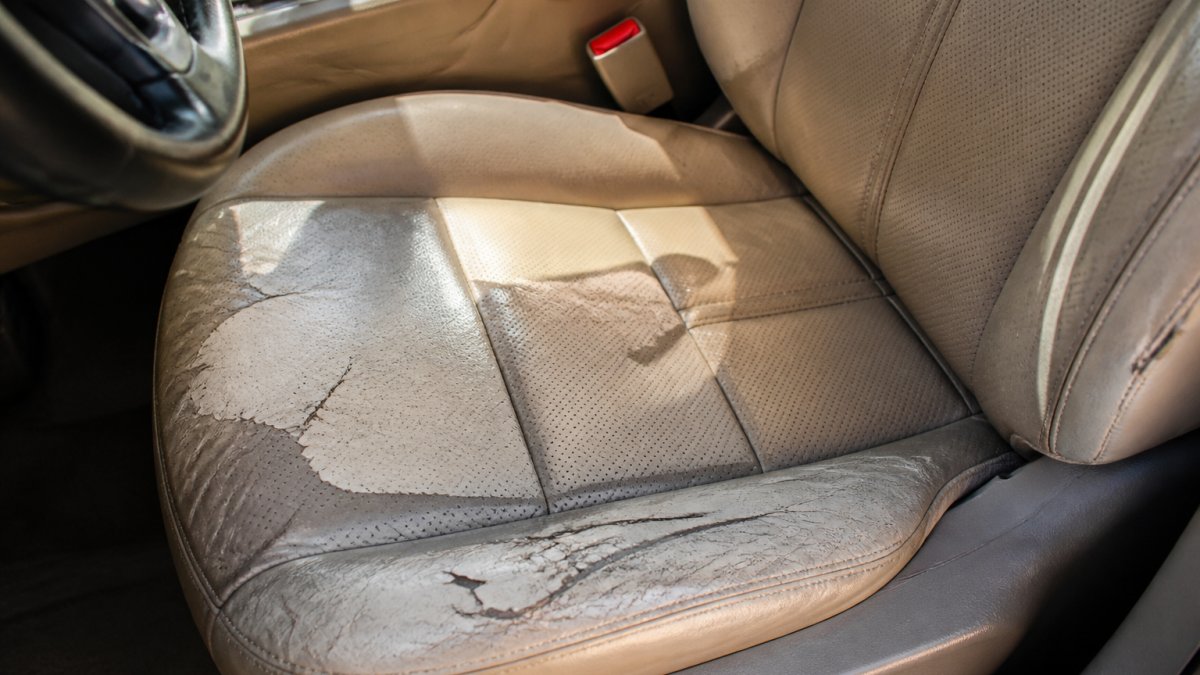
The damage isn’t just cosmetic. Weakened leather loses its structural integrity. Seats become uncomfortable, and repairs become more expensive. Prevention is always cheaper than restoration.
Common Signs of Sun Damaged Leather Car Seats
Recognizing sun damaged leather car seats early gives you a chance to stop further deterioration. Most people don’t notice the problem until multiple signs appear at once. By then, the damage runs deep.
Fading and Uneven Discoloration
Fading is usually the first sign of sun damage. Your leather seats start losing their original color, often in patches. The areas that get the most direct sunlight fade fastest, creating an uneven appearance.
This happens because UV rays break down the dyes in the leather. The fading typically starts on the top surfaces, the parts of the seat that face the windshield. You might notice the driver’s side fades more than the passenger side, depending on your local sun angle and how much time you spend parked outside.
Uneven discoloration is a red flag. If one section of your seat is noticeably lighter than another, sun damage is almost certainly the cause. This patchiness is hard to reverse once it sets in.
Cracking, Peeling, and Brittleness
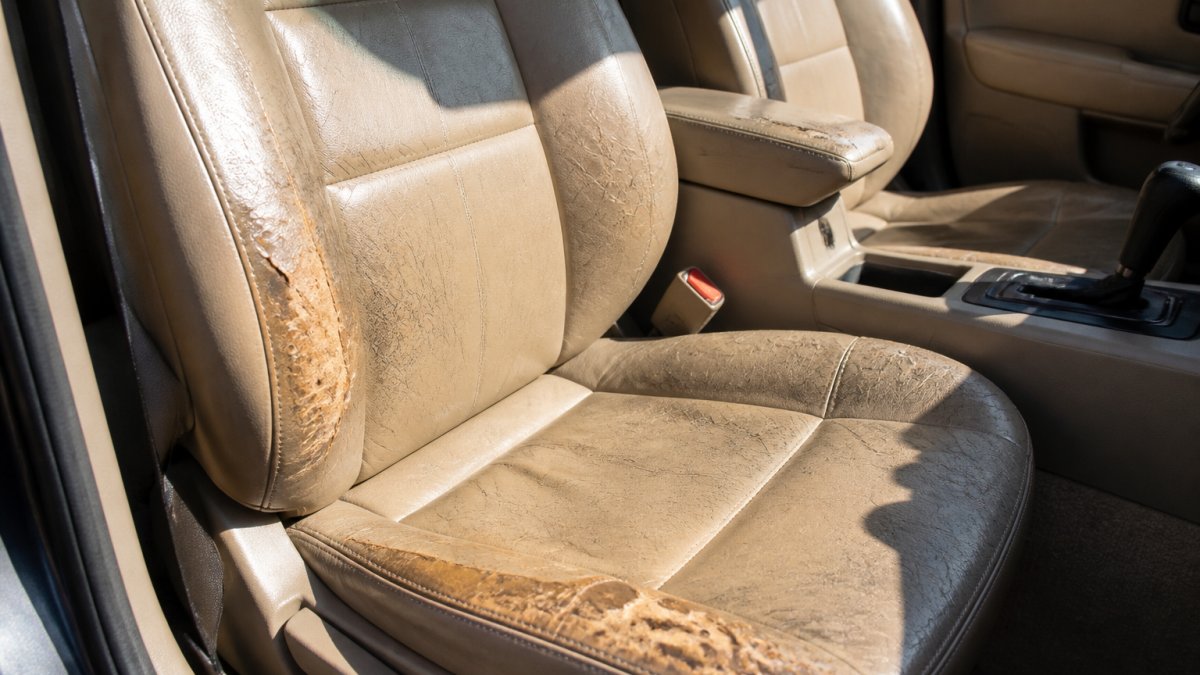
After months or years of UV exposure and heat, the leather’s protective finish breaks down completely. This is when cracking and peeling begin. You’ll see fine lines appearing across the surface, and in severe cases, the leather actually flakes off.
Brittleness comes next. The leather loses its flexibility and starts to feel stiff. When you sit down, it doesn’t give the way it used to. Press on the surface with your finger, if it feels hard and inflexible rather than soft and supple, the material has dried out significantly.
Peeling is the most visible damage. The top layer of leather separates and comes away in small pieces. This exposes the layer underneath, which deteriorates even faster. Once peeling starts, the damage accelerates quickly.
Dryness and Stiffness
Leather needs moisture to stay healthy. Sun and heat evaporate the natural oils that keep it soft and flexible. Dry leather loses its appearance and its function. Seats become uncomfortable to sit in because they don’t conform to your body the way they should.
You can test for dryness by running your hand across the seat. Healthy leather feels slightly oily and smooth. Damaged leather feels rough, chalky, or papery. If you notice a white residue on the surface, that’s often a sign of severe drying and oxidation.
Stiffness makes long drives uncomfortable. The seat doesn’t cushion as well, and the material feels almost plastic-like. This is a clear indicator that the leather’s structural integrity is compromised.
Diagnosing Sun Damage vs. Other Wear
Sun damage looks different from other types of leather damage. Knowing the difference helps you decide whether restoration is worth it or whether replacement makes more sense.
Abrasion damage comes from friction, rubbing against clothing or repeated contact with the same spot. It shows up as worn patches, usually in high-traffic areas like the center of the seat or where your back rests.
Dye transfer happens when colored fabric (like denim or a dark jacket) rubs off onto the leather. It appears as stains or discolored patches that are usually darker than the surrounding leather.
Spills and stains create wet spots or discolored areas that don’t fade evenly. They’re often confined to one area rather than spread across the whole seat. You can usually trace them back to a specific incident.
Age-related wear develops gradually across the entire seat surface. The leather loses its sheen uniformly and may develop a patina, an aged appearance that’s actually desirable in some cases. True sun damage, by contrast, creates uneven fading and visible deterioration.
Water damage from spills or humidity causes the leather to swell and may leave permanent stains. It’s usually darker and more localized than sun damage.
The key difference: sun damage is widespread, uneven, and gets progressively worse over time. Other damage is usually localized or confined to specific areas.
Severity Inspection Checklist for Faded Leather Car Seats
Use this checklist to assess how badly your leather seats are damaged. This helps you decide whether to repair, restore, or replace.
Minor Damage (repair is worth considering):
- Slight fading visible but color is still uniform
- No cracking or peeling
- Leather still feels flexible and soft
- Damage is limited to one seat or one area
- Surface is still intact with no tears
Moderate Damage (restoration may help):
- Noticeable fading across multiple seats
- Fine surface cracks visible but not deep
- Leather feels slightly stiff or dry
- Small areas of peeling (less than 10% of seat surface)
- Discoloration is uneven but not severe
Severe Damage (replacement is likely better):
- Deep cracking across large areas
- Significant peeling (more than 25% of surface)
- Leather is brittle and doesn’t flex
- Fading is extreme and color is unrecognizable
- Multiple layers of leather are damaged or missing
If your seats fall into the minor category, restoration efforts can help. Moderate damage may be worth addressing if the rest of the interior is in good shape. Severe damage usually means replacement is the only practical option.
How to Repair Leather Car Seats After Sun Damage
Repairing sun damaged leather car seats depends on the severity. Minor fading and dryness can be improved. Deep cracking and peeling are harder to fix.
For fading and discoloration:
Start by cleaning the seats thoroughly. Use a leather-specific cleaner and soft brush to remove dirt and debris. This lets you see the actual damage more clearly.
Next, condition the leather with a quality leather conditioner. This won’t reverse fading, but it restores some suppleness and can make the color appear richer.
For uneven fading, leather dye or colorant can help blend the patches. These products are applied to match the original color.
For cracking and peeling:
Minor surface cracks can sometimes be improved with deep conditioning. Apply a thick leather conditioner and let it soak in overnight. This won’t close the cracks completely, but it can make them less noticeable.
Peeling is harder to fix. If the damage is small (less than an inch across), you might try carefully gluing the peeling section back down with leather adhesive, then conditioning the area.
For severe damage:
Professional leather repair specialists have access to tools and materials that consumers don’t. They can re-dye leather, seal cracks, and sometimes rebuild damaged areas.
In many cases, replacement is more practical. New leather seats cost more upfront but last much longer and look better than heavily repaired seats.
How to Protect Leather Car Seats from Sun Damage
Prevention is far more effective than repair. The best protection starts before damage occurs.
Use sunshades when parked:
A quality sunshade blocks most incoming solar radiation before it reaches your seats. Deploy it every time you park in the sun, even for short periods.
Sunshades are inexpensive and take seconds to install and remove. They also keep your car cooler, which reduces heat stress on all interior materials.
Park in shade whenever possible:
Garages, carports, and covered parking protect your seats from direct UV exposure. If covered parking isn’t available, even the shade of a large tree helps significantly.
Tint your windows:
Window tinting is one of the most effective ways to protect leather seats from sun damaged leather car seats.
Coastal Glass Tinting has been protecting vehicles since 1980.
Apply leather conditioner regularly:
Conditioning every 3-6 months keeps leather supple and helps it resist damage. A well-conditioned leather surface is more resistant to cracking and drying than neglected leather.
Use a conditioner designed for automotive leather, not furniture conditioner or household products. Apply it evenly across all leather surfaces, following the product instructions.
Use seat covers:
Seat covers provide a physical barrier between your leather and sunlight. They’re especially useful if you park outside regularly or live in a high-UV climate.
Keep your car cool:
Crack the windows slightly when parked, or use a ventilation system if your vehicle has one.
Car Window Tint UV Protection as Prevention
Car window tint UV protection is the most reliable way to stop sun damage before it starts.
How tinting blocks UV rays:
Modern ceramic window tint uses nanotechnology to filter out harmful wavelengths. The film sits between the glass and your interior, absorbing UV radiation before it penetrates.
Quality automotive window tint blocks 99% of UV rays. This is far more effective than relying on sunshades or parking habits alone. The protection is consistent and doesn’t depend on your actions.
Additional benefits beyond UV protection:
Tinting also reduces heat penetration, which keeps leather cooler and slows the drying process. Your car stays more comfortable during hot weather, and your air conditioning doesn’t have to work as hard.
Tinting improves privacy by making it harder to see into your vehicle. It also reduces glare, which makes driving more comfortable and safer.
Professional installation matters:
DIY tinting kits produce poor results and often bubble or peel within months. Professional installation ensures the film adheres properly and lasts for years.
The investment in professional window tinting pays for itself through improved comfort, lower cooling costs, and most importantly, protection of your leather seats and interior from sun damage.
Sun damaged leather car seats don’t have to be your car’s fate. The damage starts with UV rays and heat, but prevention stops it cold.
Frequently Asked Questions
What are the main signs of sun damage on leather car seats?
Sun damaged leather car seats typically show fading or uneven discoloration, where the exposed areas appear lighter than protected spots. You’ll also notice cracking or peeling of the leather surface, dryness that makes the material stiff and brittle, and sometimes a flaky or crumbling texture. The leather may also feel rough instead of smooth. These signs develop gradually as UV rays break down the leather’s pigments and protective finish.
How can I tell if my leather seats are faded from the sun versus normal wear?
Sun fading typically appears as lighter patches concentrated on areas exposed to direct light through windows, while normal wear from abrasion shows as rubbed or shiny spots from friction. Sun damage is usually gradual and affects the color uniformly across exposed surfaces. If you see sharp color differences between the top of the seat (exposed) and the sides or underside (shaded), that’s a strong indicator of UV damage. Dryness and cracking also point to sun exposure rather than mechanical wear.
Can sun-damaged leather car seats be repaired?
Minor sun damage can often be improved through professional cleaning, conditioning, and application of protective products that restore moisture and flexibility. For moderate fading, recoloring treatments are available. However, severe cracking, peeling, or crumbling typically requires professional restoration or seat reupholstering, which is more costly. The earlier you address sun damage, the better your repair options. A professional inspection can determine whether restoration or replacement is the best choice for your specific seats.
How does car window tint UV protection prevent sun damage to leather seats?
Car window tint UV protection blocks up to 99% of ultraviolet rays before they enter your vehicle, significantly reducing the fading, drying, and cracking that occurs on leather seats. By limiting UV exposure, window tinting slows the deterioration of leather pigments and the leather finish. This preventive approach is far more effective and affordable than repairing or restoring already damaged seats. Professional window tinting installed during the early stages of vehicle ownership can protect your interior for years.