
Quick Summary
For most coastal homes, professional window film installation is the safer choice, because salt air, humidity, and intense sun make bonding and edge sealing harder than they look. DIY can work on small, low-stress windows, but mistakes are costly to fix. Check glass compatibility and get written quotes before deciding.
- Salt residue and humidity can stop film adhesive from bonding cleanly, especially at the edges.
- Edges usually fail first, since south- and west-facing windows see the greatest heat gradient.
- Budget extra film for waste, and count your own labor hours when comparing costs.
- Removing failed film and adhesive residue often costs more than a clean first installation.
- Confirm the film suits your glass type, since some films stress insulated or low-E panes.
Table of Contents
- Why Coastal Homes Make Window Film Installation Harder
- DIY vs. Professional Window Film Installation Cost
- Window Film Installation Risks on Coastal Glass
- Best Window Film for Coastal Homes
- Storm, Wind, and Glass-Safety Considerations
- Window Film Warranty and Lifespan Near the Coast
- Booking Your Coastal Window Film Consultation
- Frequently Asked Questions
DIY or Pro Window Film for Coastal Homes?
Last Updated: November 11, 2026
Why Coastal Homes Make Window Film Installation Harder
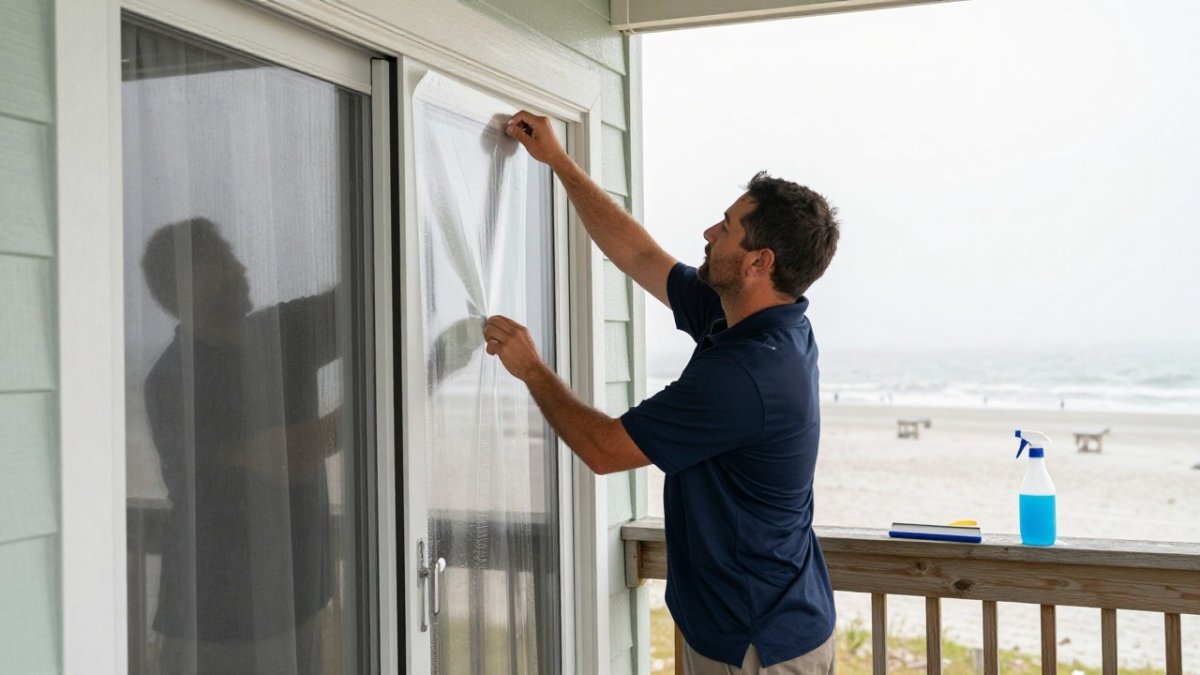
A common question for residential window film projects is whether a homeowner can do this themselves? The honest answer depends on the glass, the exposure, and how much risk you can tolerate. Salt air, humidity, and intense sun make a DIY diy vs professional window film installation for coastal homes project harder than it looks on a video.
Coastal homes face conditions that interior-facing projects never encounter. Sea spray leaves a fine film on glass that interferes with adhesion. Humidity slows curing and can trap moisture under the film. Afternoon sun on west- and south-facing windows puts heavy thermal stress on the glass, which is why the product and the glass type both matter.
Tru Tints reports that professional home window tinting can reduce cooling costs by 10-20%, a figure that only holds if the film bonds cleanly and stays put. Bay Area Home Window Tinting Cost Guide 2026
DIY vs. Professional Window Film Installation Cost
Most homeowners start with the price tag, and that is a reasonable place to start. The useful comparison, though, is not the sticker price of a DIY kit against an installer’s quote. Before deciding how to install, you can check whether window film is worth the investment for your home. It is the cost of getting a clean, lasting result on every window that needs film, and that total includes materials, tools, your time, and the cost of fixing mistakes.
Professional installers often price by the square foot and may apply a minimum charge per visit or per small window. Pricing depends on film type, window count, and project size, so contact Coastal Glass Tinting or visit our website for a current quote. Get written quotes that list the film type, the window count and approximate dimensions, removal of any existing film, and whether the price includes edge sealing and cleanup. Quotes that differ by a wide margin often differ in one of those line items rather than in the installer’s skill.
DIY material costs are lower per window, but a first-time installer should budget for extra film. Plan for waste from creases, misaligned cuts, and windows that need a second attempt. Add the cost of a squeegee kit, a utility knife with fresh blades, a spray bottle with a mild solution, a lint-free cloth, and a heat gun if the film requires it. Your own labor is not free, either. A first window often takes several hours, and the learning curve means later windows go faster but still take longer than a professional’s.
A Simple Way to Estimate Payback
A workable payback estimate uses three inputs. First, the installed cost, meaning the quote for professional work or the total DIY spend including waste. Second, the annual cooling savings, which depends on how much the film reduces solar heat gain on your west- and south-facing glass and on your current electricity rate from Duke Energy or your utility. Third, the number of years you expect the film to perform. Divide the installed cost by the annual savings to get a simple payback period in years.
For the savings input, use your own bills rather than a generic figure. Compare summer cooling costs before and after, or estimate the share of your cooling load that comes through the affected windows. Treat any manufacturer or installer savings percentage as an upper bound, not a guarantee, because results depend on orientation, shading from trees, and how well the film bonds.
What Hidden Costs Add Up
The biggest hidden cost is removing failed film. Bubbled or peeled film that has been left in place for a season often takes more time to remove than a clean first installation would have taken, and the adhesive residue may need additional cleaning. Watch out: if a DIY attempt leaves dust or contamination under the film, the only fix may be removing and reapplying it, so the true cost of a mistake is often more than the film itself.
A second cost appears with the wrong film for the glass. Some films absorb enough heat to stress insulated or low-E panes, and replacing a cracked insulated unit costs far more than the film. Confirm glass compatibility before you buy, whether you install the film yourself or hire a professional.
The article’s cost comparison comes down to a few line items that are worth checking before you decide.
| Cost item | What to include | Why it matters |
|---|---|---|
| Professional quote | Film type, window count, dimensions, removal, edge sealing, cleanup | Quotes that differ often differ in these line items |
| DIY materials | Film, squeegee kit, utility knife, spray bottle, lint-free cloth, heat gun if needed | Lower per window but adds up |
| Extra film | Waste from creases, misaligned cuts, second attempts | First-time installers should budget for it |
| Your labor | Hours for the first window, faster later | Your time is not free |
| Removing failed film | Time to strip and clean adhesive residue | Often more work than a clean first install |
| Glass compatibility | Check film suits insulated or low-E panes | A cracked insulated unit costs more than the film |
Window Film Installation Risks on Coastal Glass
The familiar risks are bubbles, creases, dust trapped under the film, and edges that lift over time. On coastal glass in Wilmington, several of these risks are more likely, and the reasons are specific enough to plan around.
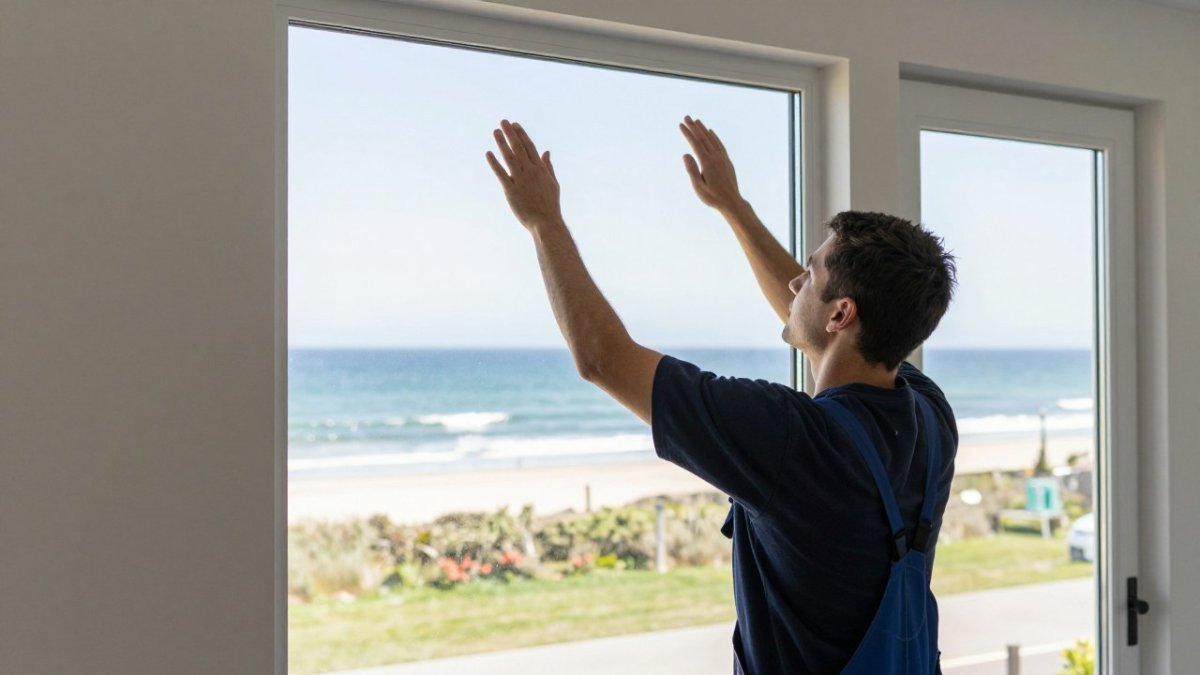
Salt spray and humid air leave a thin film of residue on exterior and interior glass. Salt is hygroscopic, meaning it attracts moisture, so a lightly salt-coated surface can stay damp longer than the same glass inland. Film adhesive needs a clean, dry bonding surface to cure properly. Residue that is not fully removed can prevent the adhesive from bonding at the edges, and that is where lifting can start. Cleaning the glass thoroughly and allowing it to dry before application helps reduce this risk. You can read seven proven steps to prevent bubbling and peeling.
Humidity also changes the installation itself. Film that cures slowly in a damp environment can trap moisture beneath the surface, which can show as hazy patches that look like bubbles but do not flatten with squeegee pressure.
Edge Failure and Thermal Stress
Edges fail first. Windows on the south and west sides take the most direct sun, and the perimeter of the film sees the greatest difference between the sun-warmed center of the pane and the cooler frame. That temperature gradient puts stress on the film’s edge seal. Wind-driven rain adds moisture pressure at the same edge, which can work under a lifted corner. A film that looks fine for the first few months may start to lift at the perimeter after the first humid summer.
Glass type matters for this stress. Insulated and low-E units can see uneven heating when heavy film absorbs solar energy. Older single-pane glass can have microscopic flaws that concentrate stress. Before installation, check whether the windows are insulated units, identify any low-E coating, and ask the installer whether the chosen film has been rated for that glass type.
What Film Cannot Do in a Storm
Security and safety film can hold broken glass fragments together, which reduces injury risk and slows entry. It does not make a window impact-rated, and it does not replace hurricane shutters or laminated impact glass in areas that require them. Coastal homeowners who need storm protection should compare film against impact-rated windows or shutters and check local building requirements before relying on film for that purpose.
Best Window Film for Coastal Homes
Choosing the right film matters as much as who installs it. Dual reflective and solar control films are options many homeowners consider for balancing heat rejection, UV protection, and visibility. A professional can recommend a specific film after reviewing window orientation and glass type.
Glass Compatibility and Low-E Windows
Many coastal homes have low-E or insulated glass. Some films can create thermal stress on these panes if the film absorbs too much heat, so the product must match the glass type. Confirm compatibility with your installer before you order.
Storm, Wind, and Glass-Safety Considerations
Film does not replace storm protection. It can help hold fragments together if glass breaks, but it does not make a window hurricane-rated. Homeowners in coastal areas should check local building requirements and discuss storm-related expectations with their installer before committing to a product.
Window Film Warranty and Lifespan Near the Coast
Lifespan depends on film quality, installation precision, and how much sun and salt the window receives. Professional installers usually back their work with a warranty on materials and workmanship, and it is worth reading the terms closely. Some warranties can be affected by how the film is applied or maintained, so ask what would void coverage before you sign.
Coastal Glass Tinting backs its materials and workmanship with a lifetime warranty.
Booking Your Coastal Window Film Consultation
If you are weighing DIY against a professional installation, start with a consultation. A trained installer can measure your windows, check the glass type, and recommend a film that fits your sun exposure and budget. If you are still deciding who to hire, learn how to choose a window tinting company in Wilmington. Contact Coastal Glass Tinting in Wilmington to request a free quote and talk through your options. You can also explore the real benefits of home window tinting in Wilmington.
Frequently Asked Questions
Is professional window tinting worth it for a coastal home?
Often, yes, especially where salt air, humidity and strong sun shorten the life of a poor installation. A professional installer can prepare the glass and cut film to fit the frame, which may reduce bubbling and uneven edges. Ask any provider to confirm what its lifetime warranty covers, including labor, before comparing prices.
Can I install window film myself without bubbles or peeling?
It is possible on small, simple windows with clean, flat glass and good conditions. Most DIY failures come from poor surface prep, dust trapped under the film and rushed squeegee work, so a first attempt on a large or curved window usually shows flaws. Test a single small pane before committing to a whole house, and plan for extra film to absorb mistakes.
What is the best window film for homes near the coast?
Coastal homes generally benefit from film that balances heat rejection, UV protection and visibility, such as dual reflective or solar control film from a quality manufacturer. Glass type matters: low-E and insulated glass can behave differently under heat, so confirm compatibility before choosing a product. A professional can recommend a specific film after checking window orientation and glass construction.
How long does professionally installed residential window film last?
Lifespan depends on film quality, glass type, sun exposure and how well the film was applied, so there is no single guaranteed number. Salt air and humidity can accelerate edge wear, which makes proper installation and a clear written warranty more important on the coast. Ask whether the warranty covers both materials and workmanship, and keep your installation records.
