
Last Updated: October 29, 2026
Quick Summary
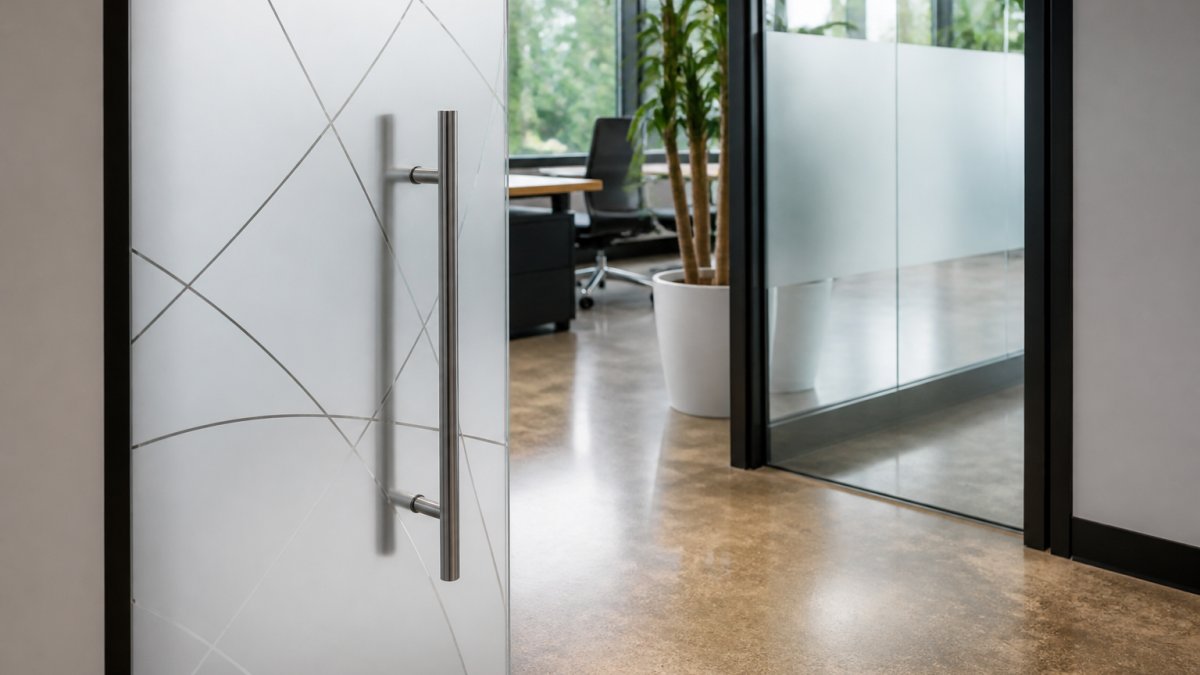
Decorative privacy film is a thin adhesive layer applied to glass that reduces visibility through the pane while allowing light to pass. Frosted film is the most popular starting point because it hides shapes and movement, not just sharp detail, so it holds privacy better than lightly tinted film.
- Full-coverage frosted film gives the most privacy; partial coverage is a design choice, not a security measure.
- Mirrored film works on the bright side of the glass and may not provide privacy after dark.
- Patterned and etched films suit entry glass and office partitions with high privacy.
- Specialty patterned and custom-cut films cost more than standard frosted film.
- Coastal Glass Tinting backs every product with a lifetime warranty on materials and workmanship.
Table of Contents
- Why Decorative Privacy Film for Glass Doors Solves a Real Problem
- Frosted Privacy Film for Glass Doors: The Most Popular Starting Point
- Window Film for Privacy and Light Control: Finding the Balance
- Decorative Glass Film Patterns That Suit Front Doors and Sidelights
- Comparing Film Types: Privacy Level, Style, and Best Use
- Residential Window Film Installation Cost: What Drives the Price
- Get a Free Quote on Decorative Privacy Film for Your Glass Doors
- Frequently Asked Questions
Why Decorative Privacy Film for Glass Doors Solves a Real Problem
Glass doors look great until someone can see straight into your home or office. Decorative privacy film for glass doors solves that problem without sacrificing daylight, and it does so at a fraction of the disruption of replacing the glass itself. Coastal Glass Tinting has served Southeastern North Carolina since 1980.
The core appeal is simple: film changes how glass behaves, not how it looks structurally. To see the actual decorative privacy film products offered for commercial glass doors, browse the catalog. The Decorative Films catalog of glass door and sidelight applications shows how broadly these films apply to entry doors, panels, and sidelights.
Decorative privacy film is a thin adhesive layer applied to glass that reduces visibility through the pane while allowing light to pass.
Commercial privacy decorative films offered by Coastal Glass Tinting
Frosted Privacy Film for Glass Doors: The Most Popular Starting Point
- Frosted film hides shapes and movement, not just sharp detail, so it holds privacy better than lightly tinted film
- Full-coverage frosted film gives the most privacy; partial coverage is a design choice, not a security measure
- Frosted film is available in different opacity levels, from light etch to near-solid
Residential tinting services from Coastal Glass Tinting
Window Film for Privacy and Light Control: Finding the Balance
The Window Film Depot guide to frosted, mirrored, and decorative options notes that privacy performance depends on lighting and film type, and that a one-way mirrored film may not provide the same privacy after dark. That is the single most important caveat in this category. Mirrored film works on the bright side of the glass. At night, when the interior is lit and the outside is dark, the effect reverses and people outside can see in.
Decorative Glass Film Patterns That Suit Front Doors and Sidelights
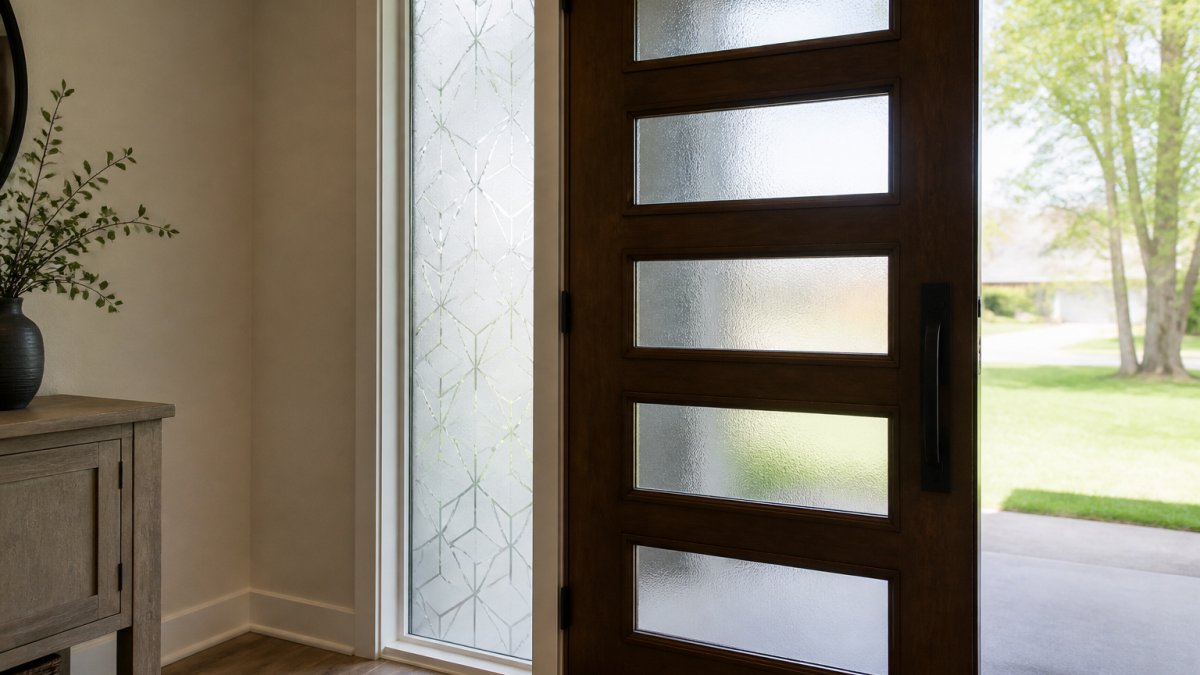
- Frosted geometric grids for a clean, modern entry
- Etched-look florals for traditional homes
- Horizontal frosted bands that mimic sandblasted glass
- Custom-cut patterns for a one-of-a-kind door
The TAG by CV overview of frosted, etched, and patterned films describes these designs as adding privacy without blocking natural light, which is exactly why they work so well on entry glass.
Comparing Film Types: Privacy Level, Style, and Best Use
| Film Type | Privacy Level | Style | Best For |
|---|---|---|---|
| Frosted | High | Clean, modern | Front doors, sidelights, bathrooms |
| Patterned/etched | High | Decorative | Entry glass, office partitions |
| Mirrored | Daytime only | Sleek, reflective | Sun-facing doors, commercial glass |
| Light tint | Low to moderate | Subtle | Doors needing heat and glare control |
| Full blackout | Maximum | Solid | Privacy-first, low-light spaces |
Once the film is on, maintenance matters. Our guide on how to clean residential privacy film safely covers the cleaning steps that keep film clear and intact for years.
Residential Window Film Installation Cost: What Drives the Price
- Film type: specialty patterned and custom-cut films cost more than standard frosted
- Square footage: more glass means more film and more labor
- Pane count and shape: many small panes take longer than one large sheet
- Access: second-story or hard-to-reach glass adds labor
- Removal of old film: existing film or adhesive must come off first
Get a Free Quote on Decorative Privacy Film for Your Glass Doors
Coastal Glass Tinting has served Southeastern North Carolina since 1980, and every product we install is backed by a lifetime warranty on materials and workmanship. We carry technologically advanced films handpicked by the world’s largest window film manufacturer.
Frequently Asked Questions
Does decorative privacy film make glass doors completely private?
Not completely. Frosted and etched films obscure shapes and details, so people outside cannot make out faces or objects, but silhouettes and shadows can still show through, especially at night when interior lights are on. For full blackout privacy you need an opaque film or a lined curtain. Most homeowners choose frosted decorative privacy film because it hides the interior while keeping daylight coming through.
Can you see through frosted window film at night?
Yes, to a degree. Frosted film diffuses light rather than blocking it, so when it is dark outside and lights are on inside, someone standing close to the glass may see blurred shapes. One-way mirrored film has the same reversal after dark. If nighttime privacy matters most, pair frosted film with exterior lighting or choose a denser, less translucent pattern for that door.
Does privacy film block natural light?
Frosted and patterned decorative films diffuse light rather than block it, so rooms stay bright while details behind the glass are hidden. How much light reaches the room depends on the film’s density and color. Lighter frosts and open patterns let through more daylight; darker or denser films cut more. Ask to see samples against your own door before deciding.
How long does decorative privacy film last on a glass door?
Coastal Glass Tinting backs its materials and workmanship with a lifetime warranty.
Your glass doors do not have to choose between daylight and privacy. Coastal Glass Tinting installs decorative privacy film backed by a lifetime warranty on materials and workmanship, using films handpicked by the world’s largest window film manufacturer. Get started with Coastal Glass Tinting and turn your clear glass doors into private, light-filled entries.
