
Last Updated: October 25, 2026
Quick Summary
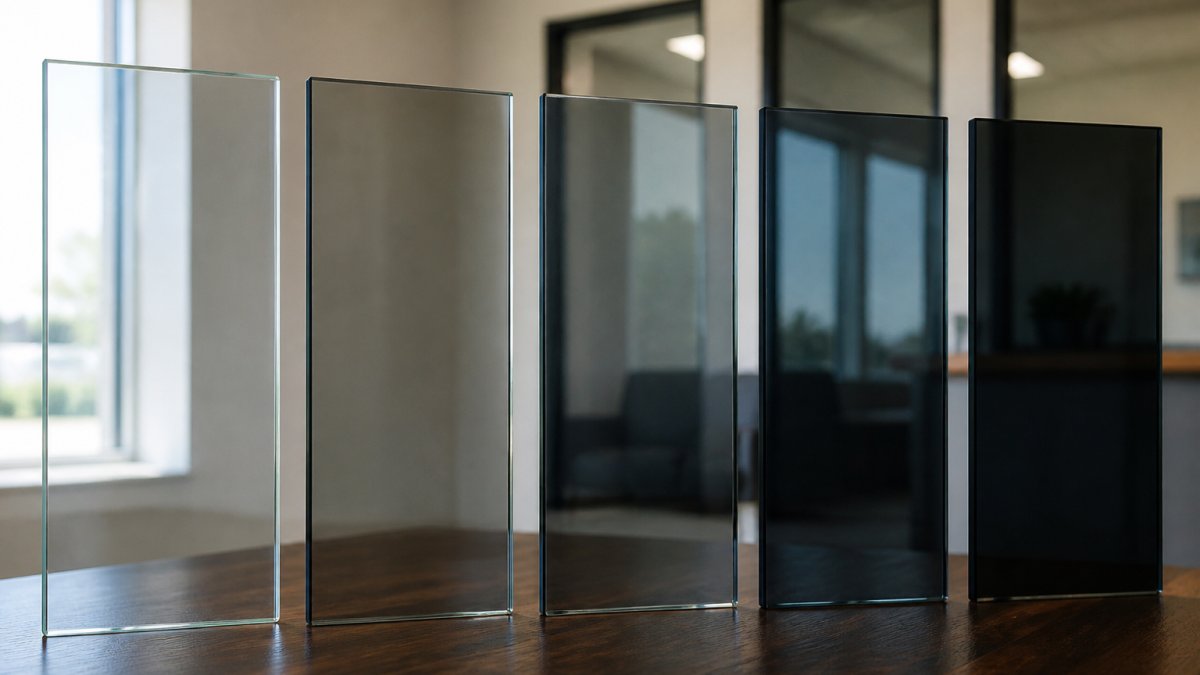
Security film thickness for commercial buildings ranges from 4 mil for entry-level protection to 24 mil for maximum defense, but thickness alone doesn’t determine performance, the complete system of glass type, frame strength, and attachment method must work together to stop threats.
- 4 mil and 8 mil films provide entry-level glass retention and minor forced-entry deterrence for low-risk areas
- 14 mil film is the practical minimum for commercial buildings with genuine security concerns, stopping opportunistic break-ins
- 24 mil film represents maximum protection without security glass, suitable for high-value targets and high-crime areas
- Film performance depends on proper edge attachment; weak attachment can be exploited regardless of thickness
- Match thickness to a documented risk profile and verify existing glass and frames can support the system
Table of Contents
- Why Security Film Thickness Matters for Commercial Buildings
- 4 mil vs 8 mil Security Film: Entry-Level Protection
- 14 mil and 24 mil Films: Heavy-Duty Commercial Defense
- Security Film vs Security Glass: Which System Wins
- The Role of Security Window Film Attachment Systems
- Matching Thickness to Your Threat Level and Budget
- Getting Your Commercial Building Assessed
- Frequently Asked Questions
Why Security Film Thickness Matters for Commercial Buildings
Security film thickness is one of the most misunderstood factors in commercial window protection. Many building managers assume thicker always means better, but the real question is whether that thickness, combined with your glass and attachment system, actually stops the threat you’re trying to prevent.
Selecting security film thickness for commercial buildings requires understanding the complete glazing system, not just picking a number off a spec sheet.
Thickness alone doesn’t predict performance. A 14 mil film from one manufacturer may outperform a 24 mil film from another, depending on the polyester composition, urethane interlayer, and edge attachment.
4 mil vs 8 mil Security Film: Entry-Level Protection
For many commercial buildings, entry-level security film falls into two categories: 4 mil and 8 mil. These thinner films are ideal for properties where the primary concern is glass retention and minor forced-entry deterrence.
4 mil film is the lightest option, designed to hold glass in place during impact and prevent shards from scattering. It suits storm debris, accidental breakage, or basic safety compliance. A 4 mil film won’t stop a determined intruder, but it will slow them down and make noise that draws attention.
8 mil film provides better tear resistance and elongation at break than 4 mil, stretching under stress rather than tearing immediately. Forced entry becomes noticeably harder, and the film holds glass together longer. For retail locations, small offices, or buildings in lower-risk areas, 8 mil often balances cost and protection.
The difference comes down to polyester thickness and urethane interlayer composition: thicker polyester adds tensile strength, more urethane improves adhesion and tear resistance. But both are entry-level solutions that won’t stop a sustained attack.
Consider 4 mil or 8 mil for low-value inventory, minimal after-hours traffic, or low-crime areas. Frequent break-in targets or high-value assets need heavier protection.
14 mil and 24 mil Films: Heavy-Duty Commercial Defense
When security is a serious concern, 14 mil and 24 mil films enter the picture. These are the workhorses of commercial security film installations.
14 mil film is where many commercial buildings find their sweet spot, delivering substantial impact resistance and tear strength without the cost of the heaviest options.
24 mil film represents maximum protection without moving to security glass.
The jump from 14 mil to 24 mil is about the complete system.
For most commercial buildings with genuine security concerns, 14 mil is the practical minimum, stopping opportunistic break-ins and deterring most forced-entry attempts.
Security Film vs Security Glass: Which System Wins
Film and security glass are different products solving overlapping problems. The useful question is not which one “wins” in general, but which delivers verified performance for your specific glazing system, threat, and building constraints.
Security glass is tempered or laminated glass manufactured with security in mind. Laminated security glass bonds an interlayer between panes during manufacturing, so the assembly is engineered and tested as a unit, with performance documented against recognized test standards.
Security film is a retrofit applied to existing glass that, with a proper attachment system, can provide glass retention and forced-entry resistance comparable to laminated glass in many configurations.
Test standards and measurable performance
This is where commercial buyers should push for specifics. Security glazing and film systems are evaluated against impact and glass-retention standards that differ by threat: physical-attack standards for forced entry and burglary, windborne-debris impact standards for storm protection, and blast-mitigation standards for blast. Manufacturers and installers should state which standard a product was tested to, the test specimen’s glass and frame, and the pass criteria.
A mil rating is not a test result. Two films with the same thickness can have different polyester and interlayer constructions and different tested performance. Ask for the test report, not just the datasheet.
Thickness versus complete system performance
Film thickness is one variable in a system. Glass type (annealed, heat-strengthened, tempered, laminated), frame material and anchorage, edge attachment method, and installation quality all determine whether the system holds under attack or impact.
Make the film-versus-glass decision at the system level. For new construction, laminated security glass is often the cleaner specification because performance is engineered and documented as an assembly. For existing buildings, film is frequently the practical choice, provided the glass and frames can support the film and attachment system.
How to decide
- New construction or full renovation: specify laminated security glass where the threat justifies it, and confirm the frame and anchorage are engineered for the glazing.
- Existing building with sound glass and frames: a professionally installed film system with continuous attachment is often the cost-effective path; require test documentation and a site-specific assessment.
- Existing building with weak or deteriorated glazing: address the glass and frames first, or scope a partial replacement; film alone will not fix a structural weakness.
- High-consequence facilities: require third-party documentation, engineered attachment details, and insurer review before committing to either approach.
Security glass and security film are both system-level solutions. Compare them on tested performance, substrate compatibility, attachment, and documentation, not on thickness or price alone.
The Role of Security Window Film Attachment Systems
Many installations fail because the film is only as strong as its edges.
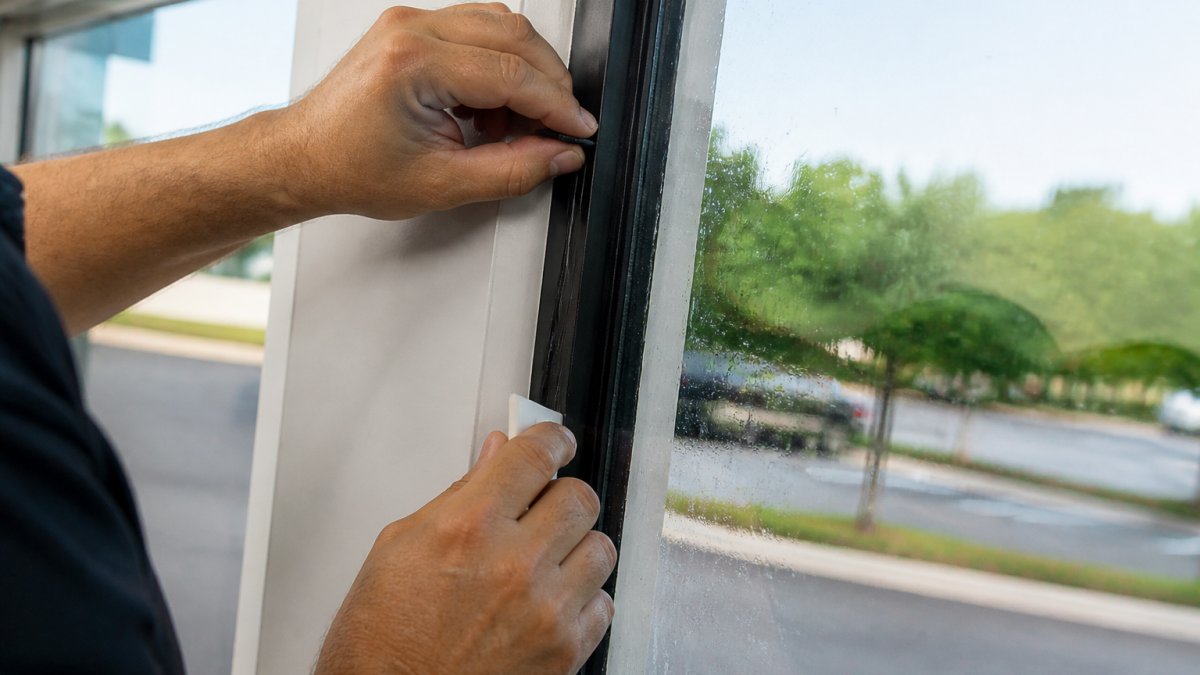
An attachment system secures the film to the window frame perimeter. Without it, even thick film can be peeled away from the glass edge, creating an entry point an intruder can exploit.
Common attachment methods include structural silicone sealant around the film perimeter and mechanical systems using frames or clips to hold edges tight.
Thickness without proper attachment is incomplete protection.
Matching Thickness to Your Threat Level and Budget
Selecting the right thickness comes down to what you’re protecting against and how much you can spend. For commercial buildings, “threat level” is too vague to act on, match thickness to a risk profile defined by occupancy, asset value, after-hours exposure, and the consequences of a breach, then confirm the complete glazing system can support that thickness.
A decision matrix for commercial risk profiles
Use this matrix as a starting point, then adjust for glass type, frame condition, and insurer requirements. Thickness ranges are film thickness in mils; system requirements describe what must accompany the film for the rating to hold.
| Risk profile | Typical commercial settings | Film thickness range | Minimum system requirements |
|---|---|---|---|
| Low | Low-traffic offices, storage with minimal after-hours exposure, interior partitions | 4-8 mil | Clean glass, sound frame, basic perimeter sealant; glass retention for accidental breakage and light debris |
| Moderate | Street-level retail, clinics, professional offices, schools in lower-incident areas | 8-14 mil | Continuous edge attachment (structural silicone or mechanical), verified frame anchorage, impact-rated glass where available |
| High | Jewelry and electronics retail, pharmacies, banks and credit unions, cash-handling areas, high-value inventory | 14-24 mil | Mechanical attachment to a structural frame, verified anchorage to substrate, documented installation, consideration of laminated glass or full glazing-system replacement |
| Very high | Critical facilities, high-crime locations, assets with regulatory or life-safety implications | 24 mil or laminated security glass | Engineered glazing system with tested retention, frame reinforcement, and third-party documentation |
Thickness alone does not create a security rating. A 24 mil film on a weak frame with spot attachment can underperform a 14 mil film on a reinforced frame with continuous attachment. Treat the matrix as a scoping tool, not a guarantee.
Commercial-specific thickness guidance by building type
Storefronts and retail. Ground-floor display glass is the most common breach point.
Schools and childcare facilities. The priority is often glass retention and debris containment rather than forced-entry resistance. Many districts specify 8-14 mil with attachment, sometimes pairing film with laminated glass in vulnerable areas.
Offices and professional suites. Street-level and accessible windows warrant 8-14 mil; upper floors and interior glass may only need 4-8 mil for safety glazing and debris retention. Treat data rooms and cash-handling areas as high risk regardless of floor.
Healthcare facilities. Patient-room and behavioral-health glazing has life-safety and ligature considerations film alone does not solve.
Warehouses and distribution. Loading doors and ground-level windows are the exposure points. 14 mil with mechanical attachment is common where forced entry is the concern; 4-8 mil may suffice for debris retention in low-risk storage.
Budgeting the complete system, not just the film
Film is priced per square foot of installed system, not per mil. A practical approach is tiered protection: apply the highest thickness and strongest attachment to the most vulnerable entry points, ground-floor windows, windows near inventory or safes, and street-visible windows, and use moderate thickness on secondary windows.
Also consider the complete glazing system. A 14 mil film on weak annealed glass will not perform like 14 mil film on tempered or laminated glass, and frame anchorage often becomes the limiting factor before film thickness does.
Match thickness to a documented risk profile, then verify the glass, frame, and attachment can support it. The right answer is the lightest system that reliably addresses your threat, not the heaviest film you can afford.
Getting Your Commercial Building Assessed
The best way to determine the right thickness is a professional security assessment.
A qualified installer evaluates your windows, identifies vulnerable entry points, assesses your threat level, and recommends a thickness and attachment system matched to your needs, preventing both over-buying and under-buying protection.
During an assessment, the installer should ask:
- What are you protecting against, burglary, storm damage, forced entry, privacy?
- Which windows are most vulnerable?
- What’s your budget for the project?
- What’s the condition of your existing glass and frames?
- Do you have any insurance or regulatory requirements?
Coastal Glass Tinting has been helping commercial property managers across the region make these decisions since 1980. We assess your building, explain the trade-offs between thickness options, and recommend a system backed by our lifetime warranty on materials and workmanship. Security film installation best practices guide from industry resources can help you understand what to expect from a professional installation.
The right thickness isn’t the heaviest option, it’s the one that protects what matters most while fitting your budget.
Security film thickness decisions shouldn’t be made in a vacuum.
Coastal Glass Tinting can assess your commercial building, explain your options, and install a security film system designed for your specific threats and budget.
Frequently Asked Questions
What thickness of security film is best for commercial windows?
The best thickness depends on your threat level and building use. Entry-level protection starts at 4 mil to 8 mil for general burglary deterrence and glass retention. Higher-risk facilities, banks, retail, government buildings, typically use 14 mil to 24 mil films for forced-entry resistance and blast mitigation. Thickness alone doesn’t guarantee performance; the complete system (film, glass type, and attachment method) determines actual protection. Consult a professional to assess your specific security needs and local building codes.
How does a security window film attachment system improve protection?
A security window film attachment system secures film edges to the window frame, preventing glass from being pried out even after the pane shatters. Without proper attachment, an intruder can still remove the film and glass by breaking the perimeter seal. Perimeter attachment systems add structural integrity and increase the time and effort required to breach the window. Perimeter attachment systems are essential for commercial security film applications where forced-entry resistance is critical.
Is security film the same as security glass, or should I use both?
Security film and security glass serve similar purposes but differ in cost, installation, and performance. Security glass is laminated and built into the window during manufacturing, offering consistent protection but requiring full window replacement. Security film is retrofitted to existing windows, costs less, and installs faster, making it ideal for commercial buildings with budget constraints. Many facilities use both: security film on ground-floor and high-risk windows, and security glass on entry points or areas requiring maximum protection.
What is the cost difference between 4 mil and 14 mil commercial security film?
Thicker films (14 mil and above) cost more than thinner options (4 mil to 8 mil) due to material and installation complexity. Contact Coastal Glass Tinting for a detailed quote based on your building’s square footage, threat profile, and attachment requirements.
